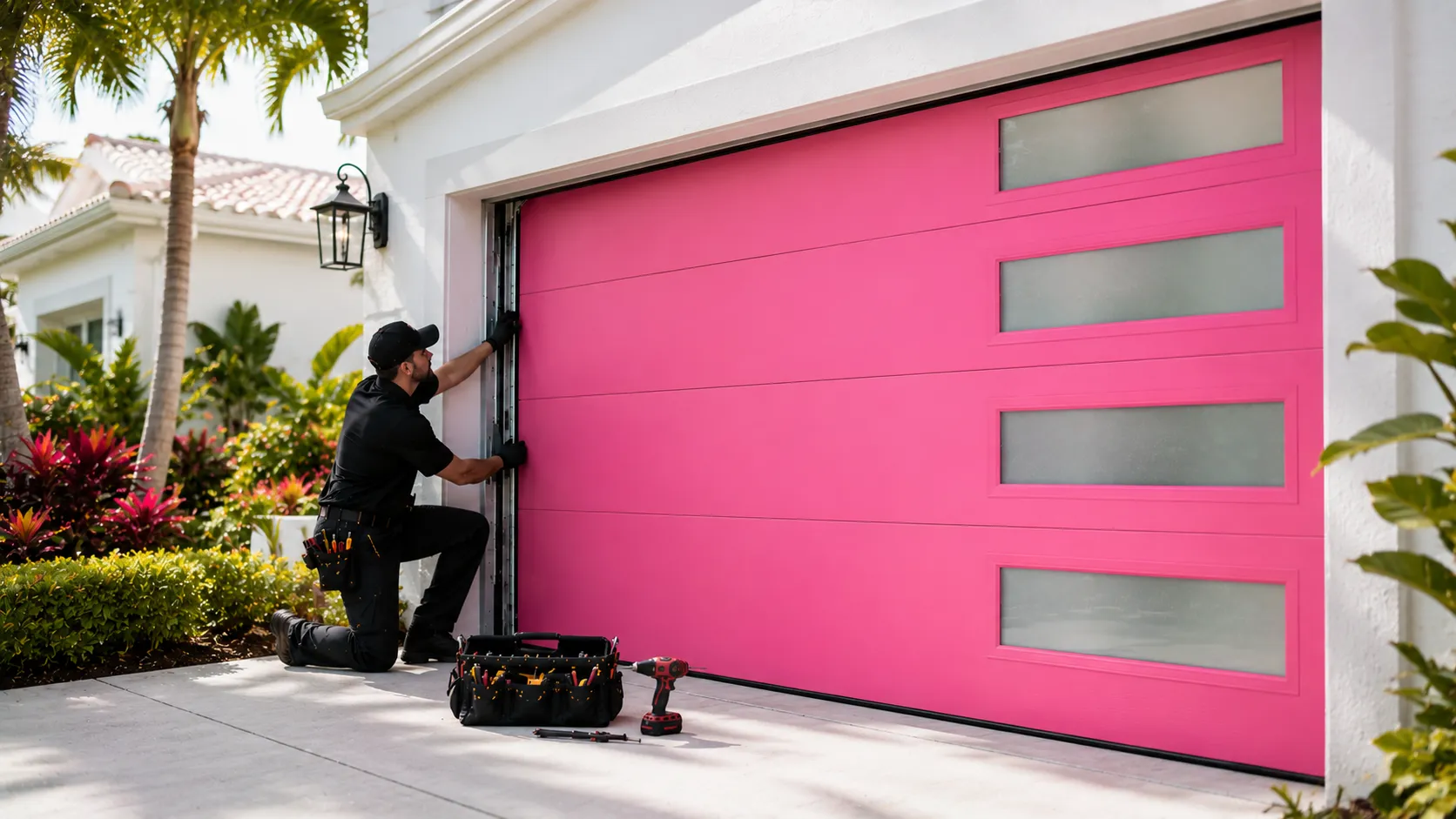
Once you call, the next step is getting someone to your door to look at what's actually broken - a bent track, a snapped torsion spring, a worn roller, an opener that's stopped talking to the wall switch. On a lot of the 1980s and 90s builds we see, the fix is a matter of swapping worn hardware for parts rated for today's doors, since the original gear from that period isn't always still made.
One honest limitation: if your door needs a part that's back-ordered or a full panel replacement rather than a repair, that can take longer than a same-day fix, and we'll tell you that up front rather than let you assume it's a quick job. We'd rather give you a real timeline than a short one that falls apart.
We're straightforward about when replacement beats repair too - if a door from that older building stock has enough wear across the whole system, patching one part just means you're back to square one in a year. In that case we say so instead of running up a bill on parts that won't hold.