
Income-based prevention preference
That matters here - with a median household income of $56,152, most owners we talk to want a maintenance visit that catches a problem early, not a full door replacement they didn't budget for.
Punta Gorda, FL
Maintenance for the 1970s-2000s door hardware common across Punta Gorda and Charlotte County, matched to the area's mild, salt-air climate.
Local causes
Most of the housing across this service area went up between 1971 and 2003, with the bulk of it dating to the mid-1980s. That's a long run of one era of garage door hardware - steel torsion springs, chain and belt openers, roller tracks - installed at build time and, in a lot of houses, never touched since. A door that age isn't broken yet, but it's carrying thirty-plus years of lubricant breakdown and metal fatigue that nobody sees until a cable snaps or a spring lets go.
The climate here doesn't help in the way people expect. This is a mild temperate band, so we don't get the hard freeze-thaw cycling that cracks springs up north. What we get instead is humidity and salt-laden air working steadily into every metal part, day after day, all year. Grease that would last a decade in a dry climate gums up or washes thin here in half that time. Bare hinges and rollers pick up surface rust before the door ever shows a hard fault. It's a slow failure, not a sudden one, which is exactly why maintenance gets skipped until the door quits.
The repair
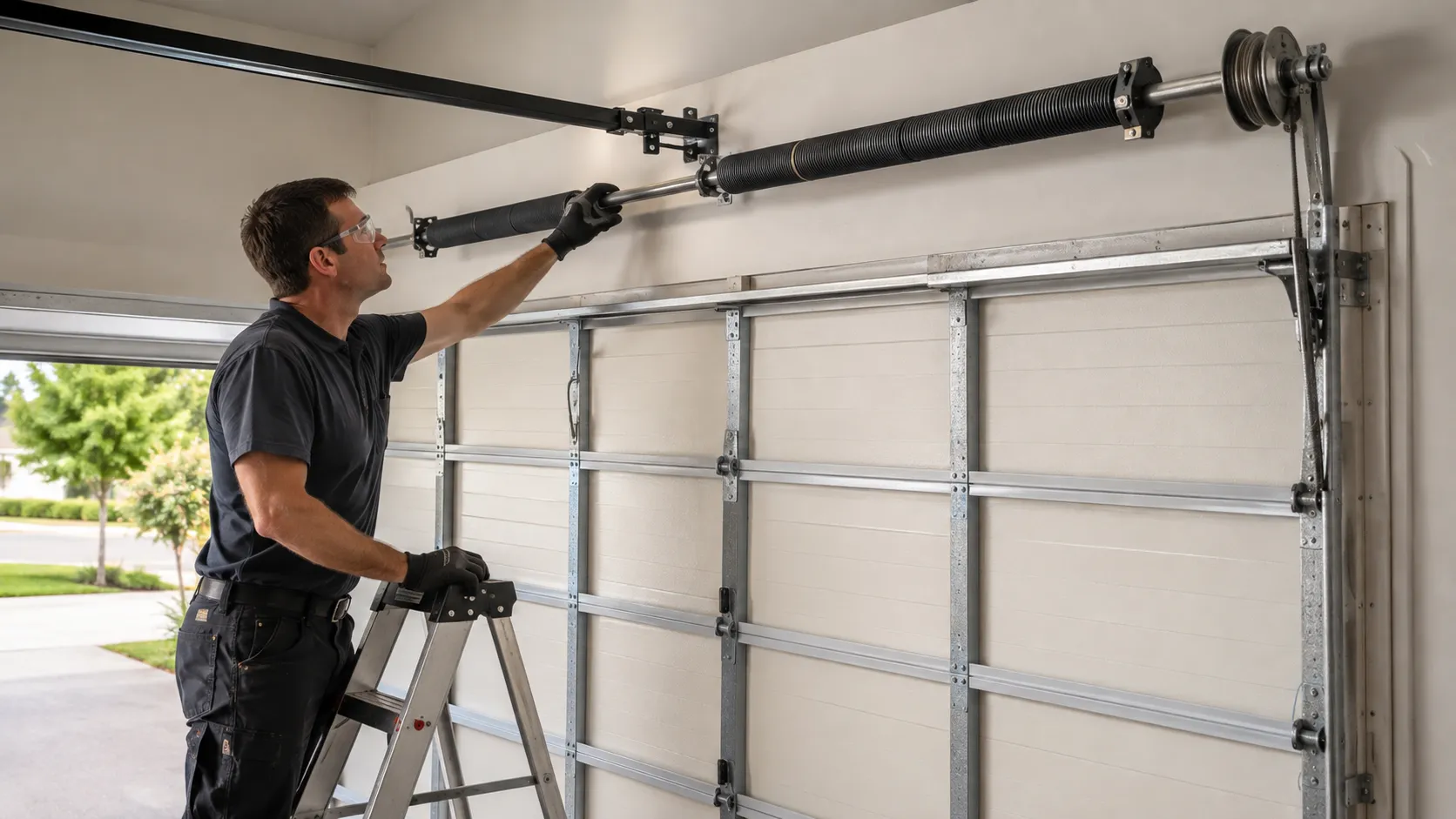
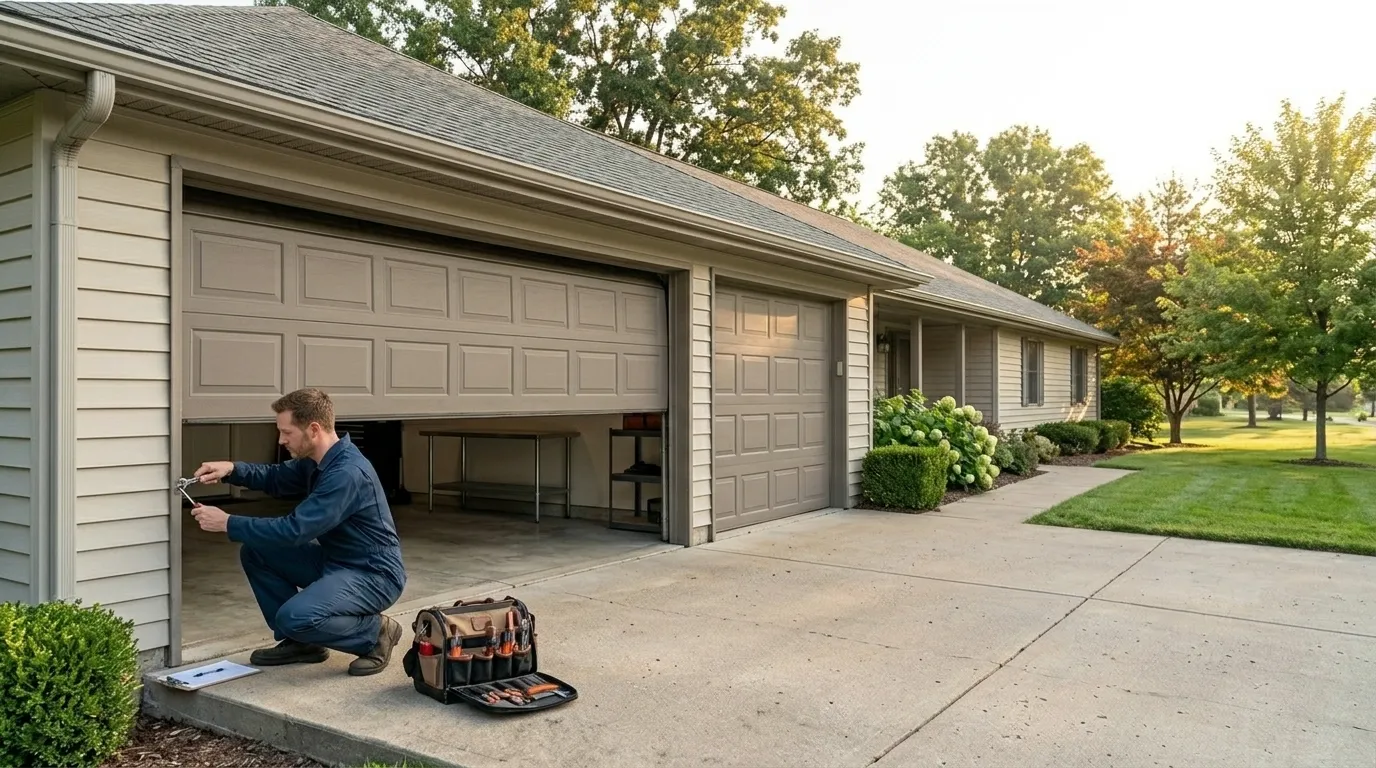
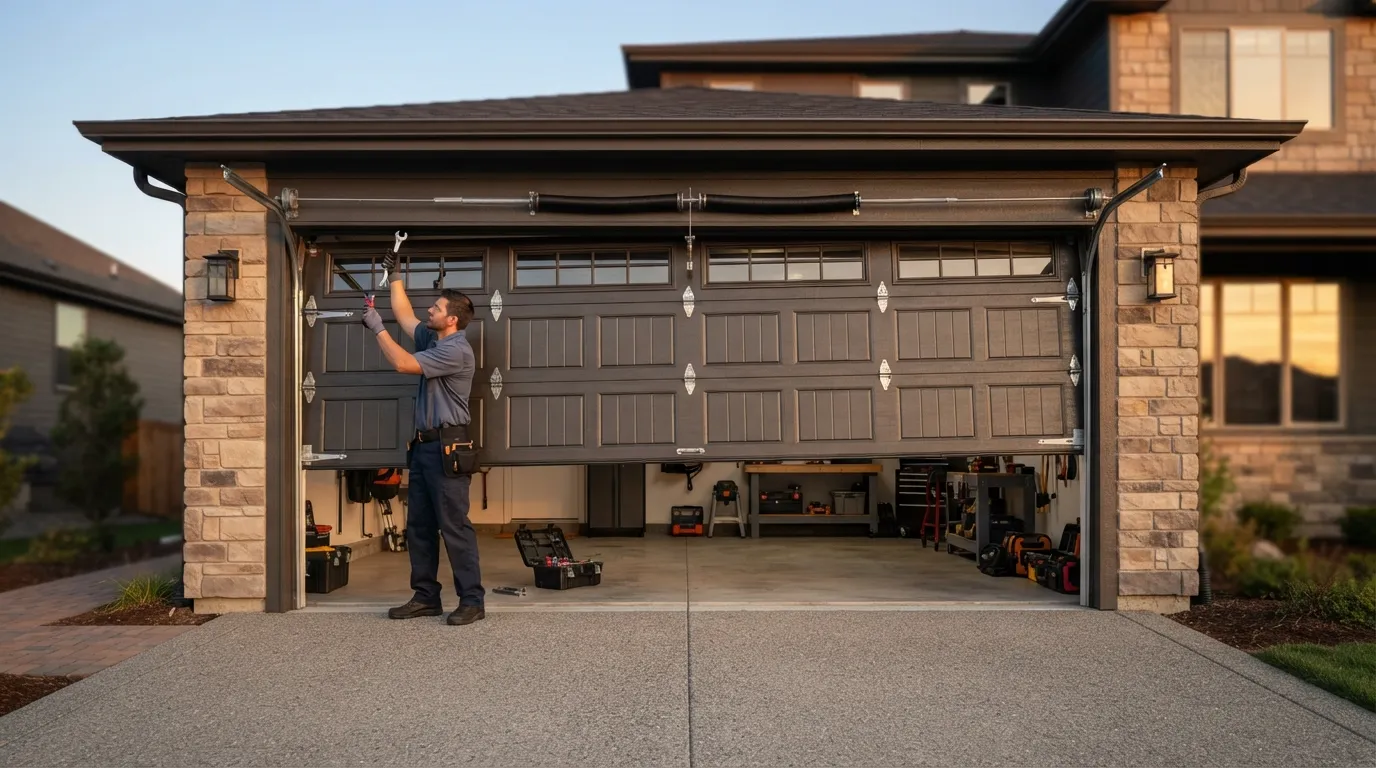
A maintenance visit on a door from this era starts with the spring system - checking wind tension, looking for flat spots or rust pitting on a torsion spring that's been carrying the same load since the house was built.
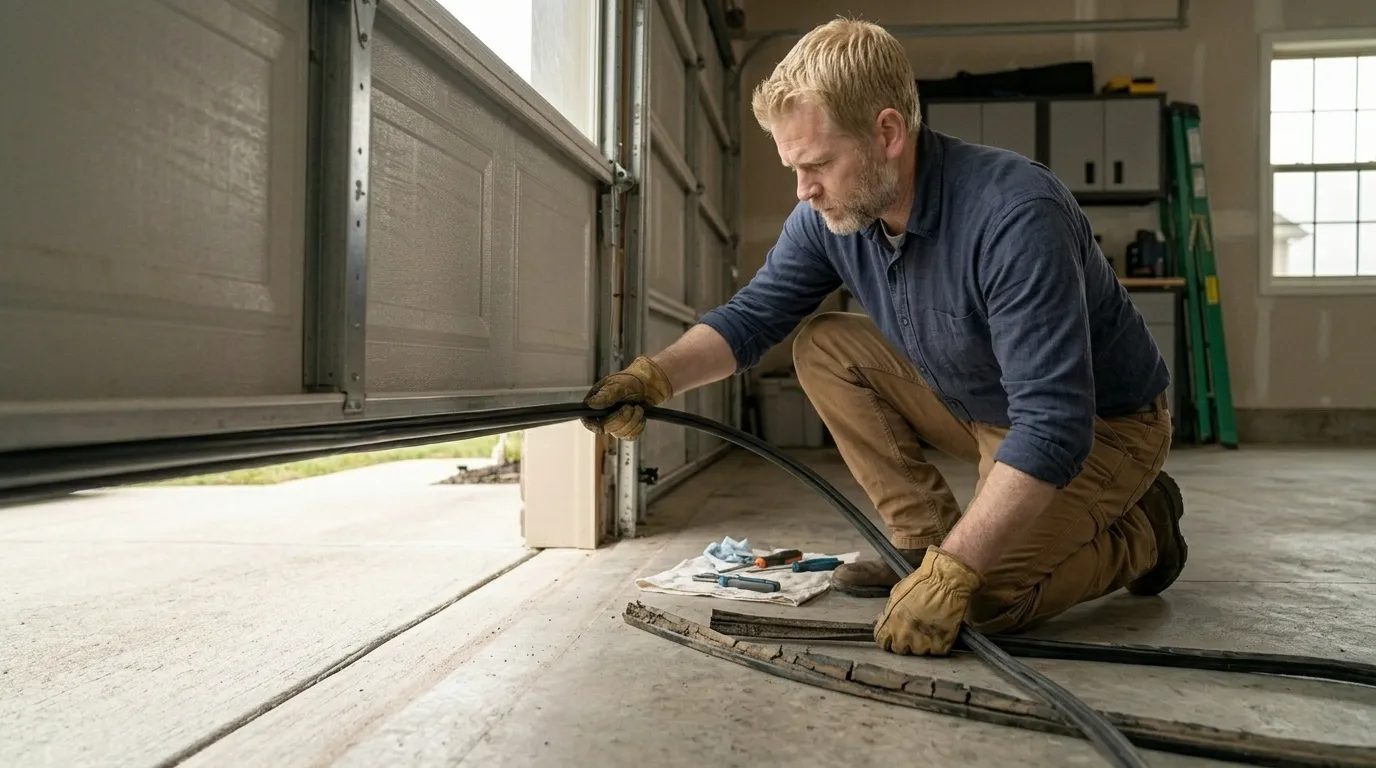
We check cable ends and drum set screws, since those loosen with cycles rather than age alone. Tracks get cleaned and realigned rather than just wiped down; grit and salt residue in the track is what makes a roller bind, not usually the roller itself.
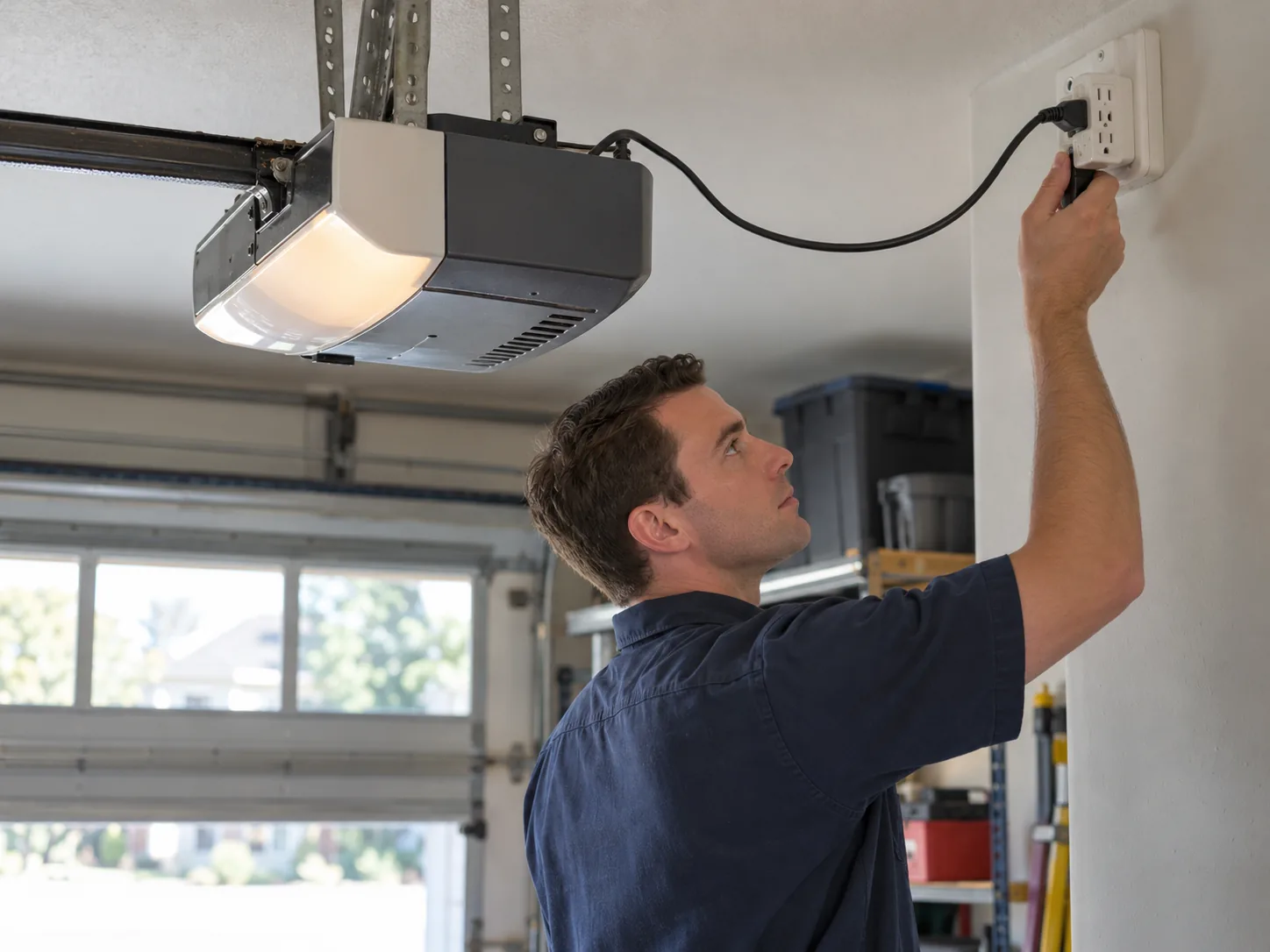
We re-grease with a lubricant suited to this climate, not a general-purpose spray that breaks down in a season of humidity. Opener gear sets and drive chains or belts get inspected for wear, and we test the force and travel limits, since a door that's slowed or sagged slightly over the years often has an opener still trying to run its original settings.
We don't replace parts that don't need it. If a spring is still within tolerance, we leave it - a maintenance visit is not an upsell to a new door, and we tell owners plainly when a part has years left in it.
Symptoms
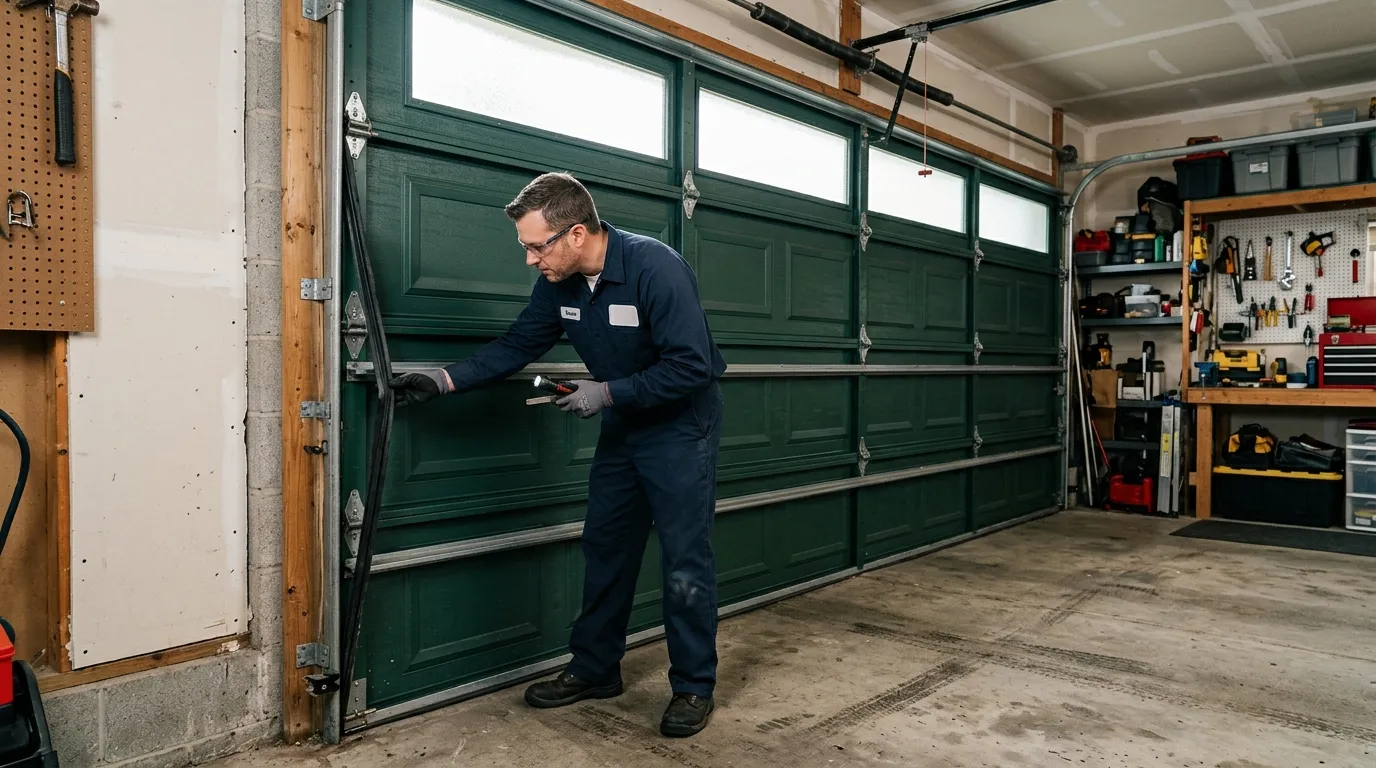
The tell on a door of this age is usually noise before it's motion. A grinding or popping sound when the door starts to move, a slight shudder partway up the track, or an opener that runs a beat longer than it used to before the door catches - those are the early signs of hardware that's dried out or drifted out of alignment, not signs of failure yet.
Owners in the 6,912 owner-occupied houses across this service area often describe it as the door 'feeling heavier' on one side, or the opener straining on the last foot of travel. That's usually a spring that's lost a little tension working against original hardware that's never been re-lubricated. Left alone, it turns into a snapped cable or a spring failure, usually on a day when the door is loaded with weight and moving fast.
If a door is already grinding metal-on-metal or dropping suddenly partway through its cycle, that's past maintenance - that's a repair call, not a tune-up.
On the truck
Because so much of the local stock dates to the 1980s and 90s, we stock the rollers, cables, and standard-size torsion springs sized to fit that era of door rather than only newer hardware.
That matters here - with a median household income of $56,152, most owners we talk to want a maintenance visit that catches a problem early, not a full door replacement they didn't budget for.
We carry general-purpose lubricant rated for humid, salt-air conditions, along with standard opener sensors and limit switches that tend to wear out around the same age as the springs they share a door with.
What we don't carry on the truck is specialty hardware for high-end custom doors or discontinued opener models - those sometimes mean a special order, and we'll tell you upfront if that's the case rather than guess at a fix.
Questions
For a door in this climate, once a year is a reasonable baseline, closer to every eight months if the door faces open weather or gets heavy daily use. The salt air and humidity here work into hardware faster than a dry inland climate would, so grease and rollers wear on a shorter clock than the manual usually assumes.
Depends on condition, not age alone. A lot of the doors we see from the 1980s and 90s still have solid panels and a spring that's within tolerance - those are worth servicing. If the spring is pitted, the panels are sagging, or the opener is a discontinued model with no parts support, replacement usually costs less over time than repeated repair calls.
Maintenance is inspection, lubrication, alignment, and tension checks on hardware that's still working. Repair is fixing or replacing a part that's already failed - a broken spring, a snapped cable, a stripped gear. We'll tell you during a maintenance visit if something's close to failing so it doesn't turn into an emergency call.
Yes, we cover the surrounding service area as well. The housing stock and climate factors that drive maintenance needs here are consistent across the wider area, so the same tune-up approach applies whether the door is in Punta Gorda or one of the nearby communities we serve.
Explore more
Ready when you are
Punta Gorda Garage Door Pros repairs and installs garage doors, springs and openers in Punta Gorda, FL and the surrounding area.