
Eighty-nine chain-drive standard equipment
That gap matters more than it sounds. A house built in 1989 usually shipped with a chain-drive opener on a steel rail, wired to a wall switch with no safety-reversal sensors required yet by code.
Harbour Heights, Punta Gorda
Harbour Heights houses run newer than most of Punta Gorda's stock, median build year 1989. That changes which opener fits and what the old one is doing wrong.
Job timing
Harbour Heights sits a step ahead of the rest of the Punta Gorda service area on build year. The area median here runs 1989, a few years past the 1985 median across the wider territory we cover.
That gap matters more than it sounds. A house built in 1989 usually shipped with a chain-drive opener on a steel rail, wired to a wall switch with no safety-reversal sensors required yet by code.
Houses from the earlier wave, closer to 1980, sometimes got an even simpler unit or had one swapped in later by whoever owned the place first. When we come out to Harbour Heights we're usually looking at the tail end of that first-generation chain drive, not the plastic-gear belt units that came standard in newer construction elsewhere.
The gearing wears differently, the rail sags differently, and the wiring harness is a different generation of parts entirely. Knowing which decade built the house tells us before we even open the truck what we're pulling out and roughly what's failed.
Booking
We run this job out of Punta Gorda, about 8 miles from Harbour Heights. There's no branch or depot in Harbour Heights itself, and we're not going to pretend there is. What that means for you: we schedule the visit, load the opener and hardware for your door size before we leave, and drive straight out. If you want a look at the range of door work we do in the area first, the Harbour Heights garage door service page covers more than just openers. If Punta Gorda itself is closer to your search, the opener installation page for Punta Gorda is the one for that side of things.

Symptoms
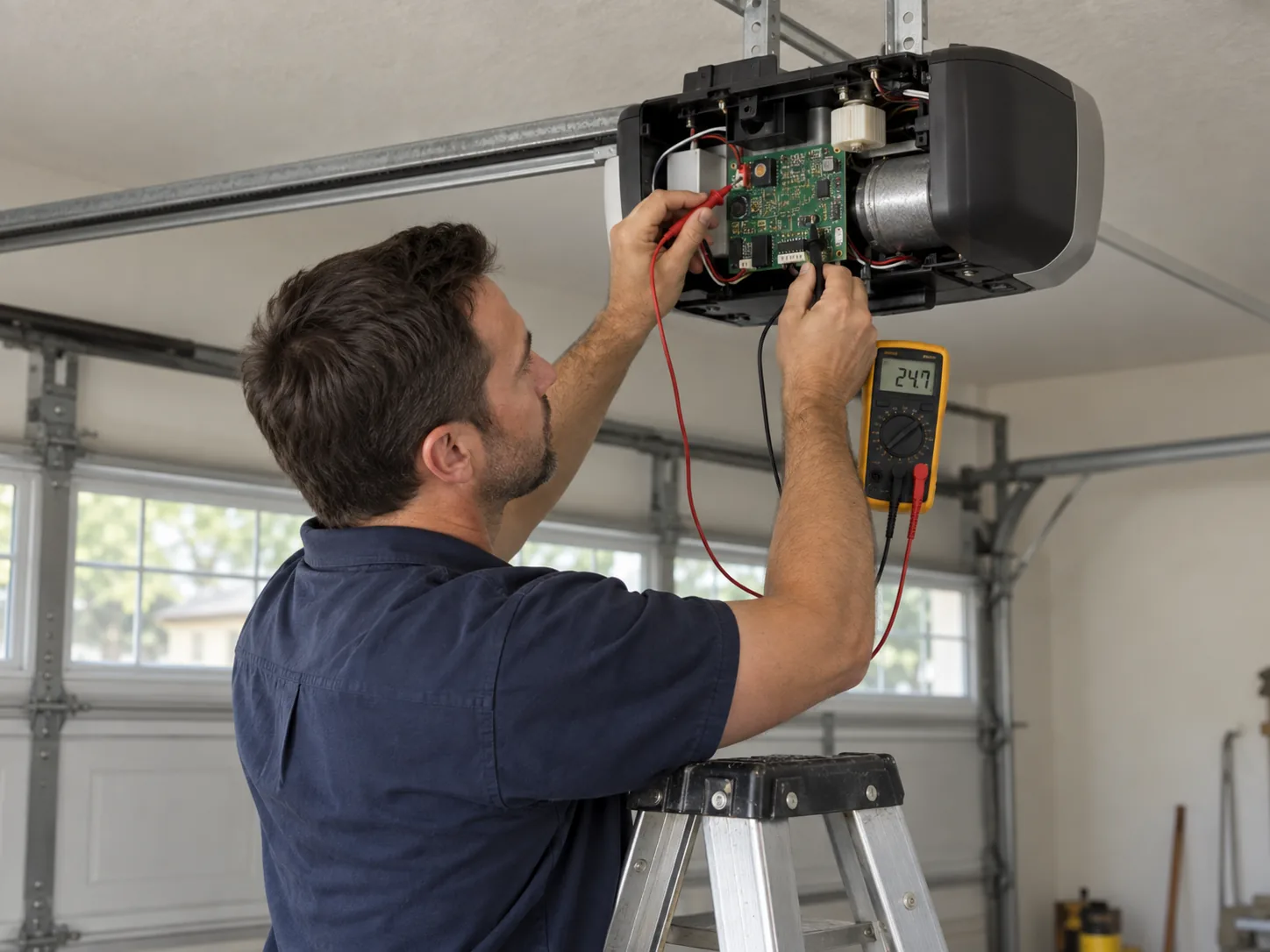
The call we get most from this stretch of houses is an opener that runs the motor but the door barely moves, or moves for a second and stops. On a unit installed around 1989, that's almost always the drive gear inside the housing, stripped down from three decades of chain tension. A close second is a door that reverses on its own halfway up, which on these older units usually traces back to worn limit switches rather than the photo-eye sensors people expect on newer systems, since a lot of these houses never had photo-eyes retrofitted. Neither fault means the door itself is bad. It's the opener giving out on schedule.
The repair
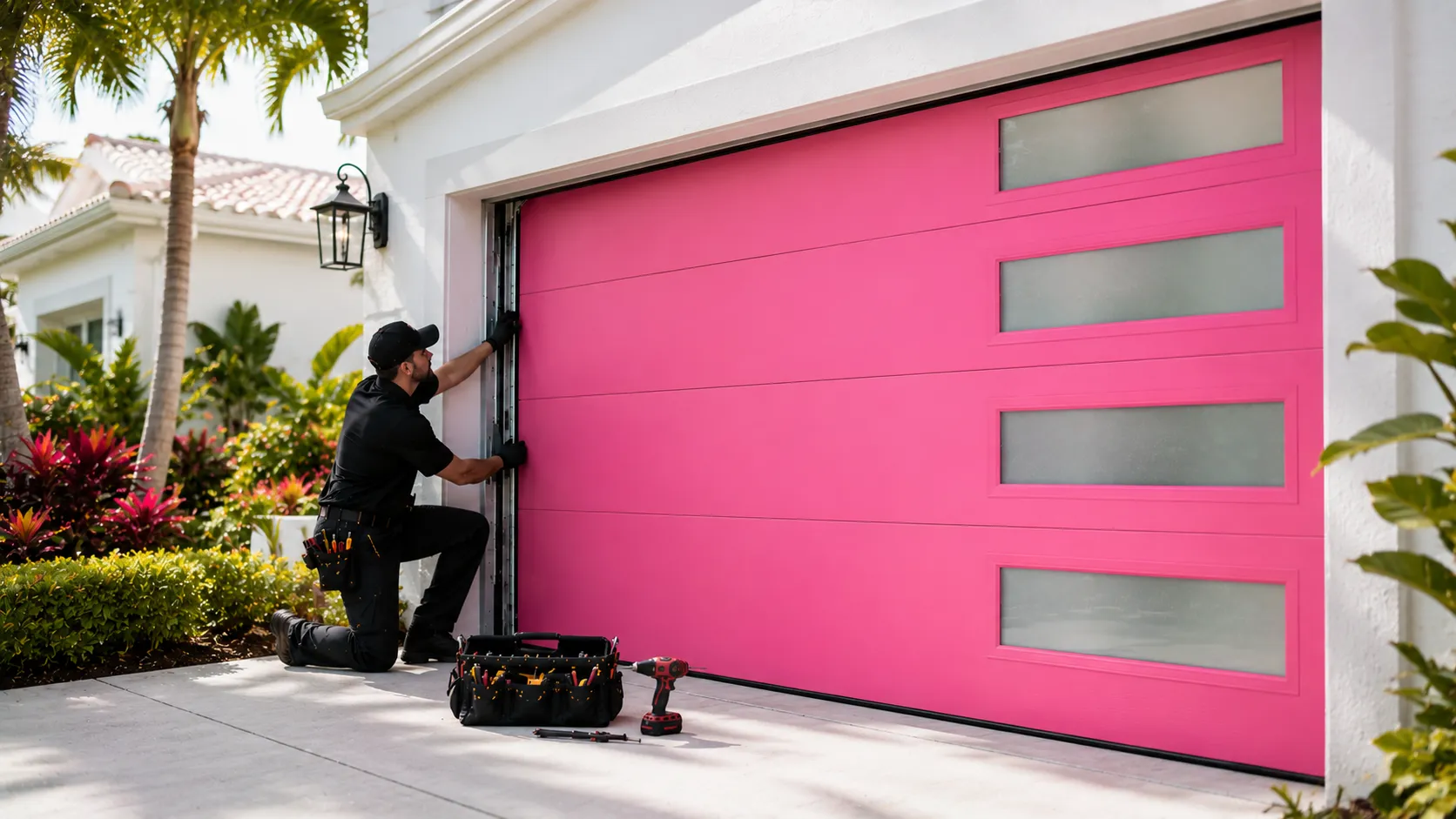
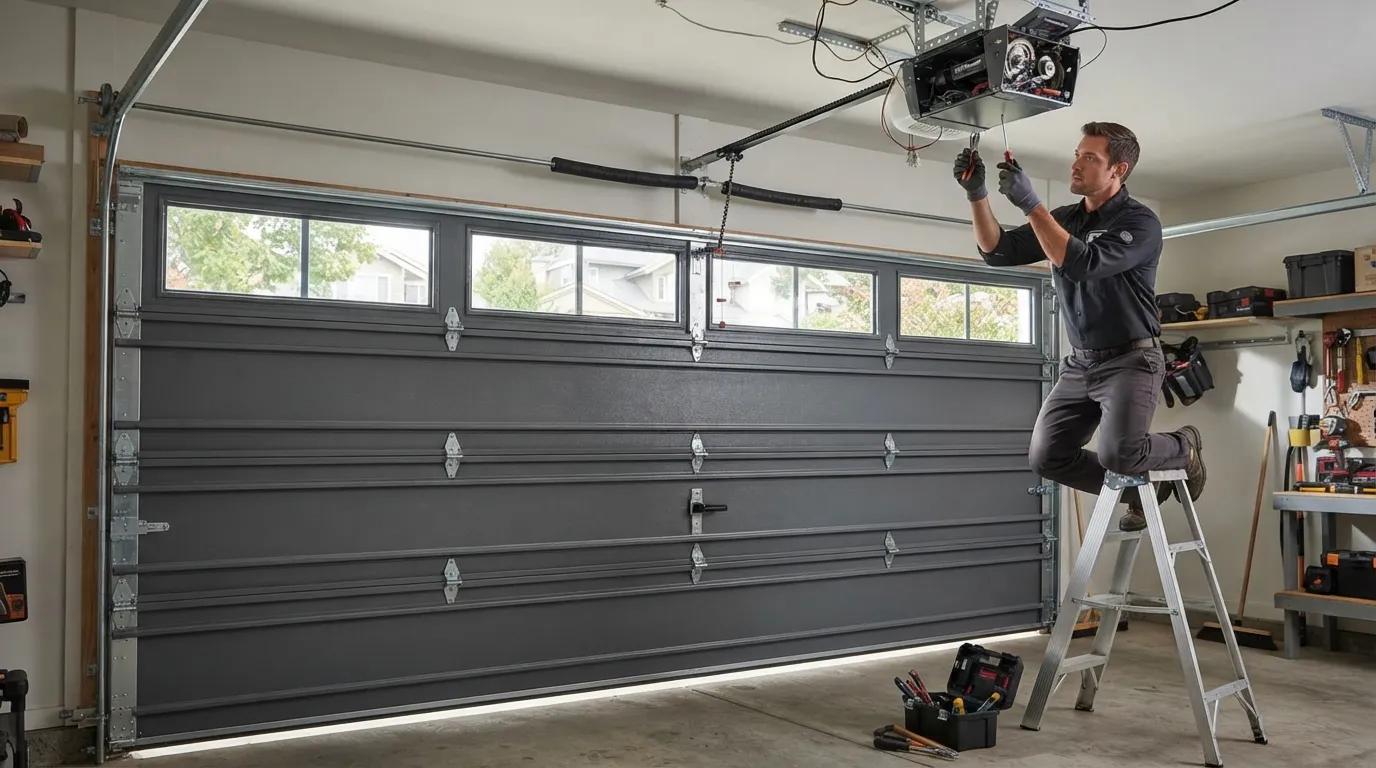
Installing a new opener on one of these houses starts with pulling the old rail and motor housing off the ceiling bracket and header bracket, both of which are often original and need checking for wood rot or rust before anything new goes up.
We size the new opener's horsepower to the door - most single doors here run fine on a standard chain or belt unit, but wider double doors built to the same 1989-era header framing sometimes need the heavier-duty motor to avoid straining.
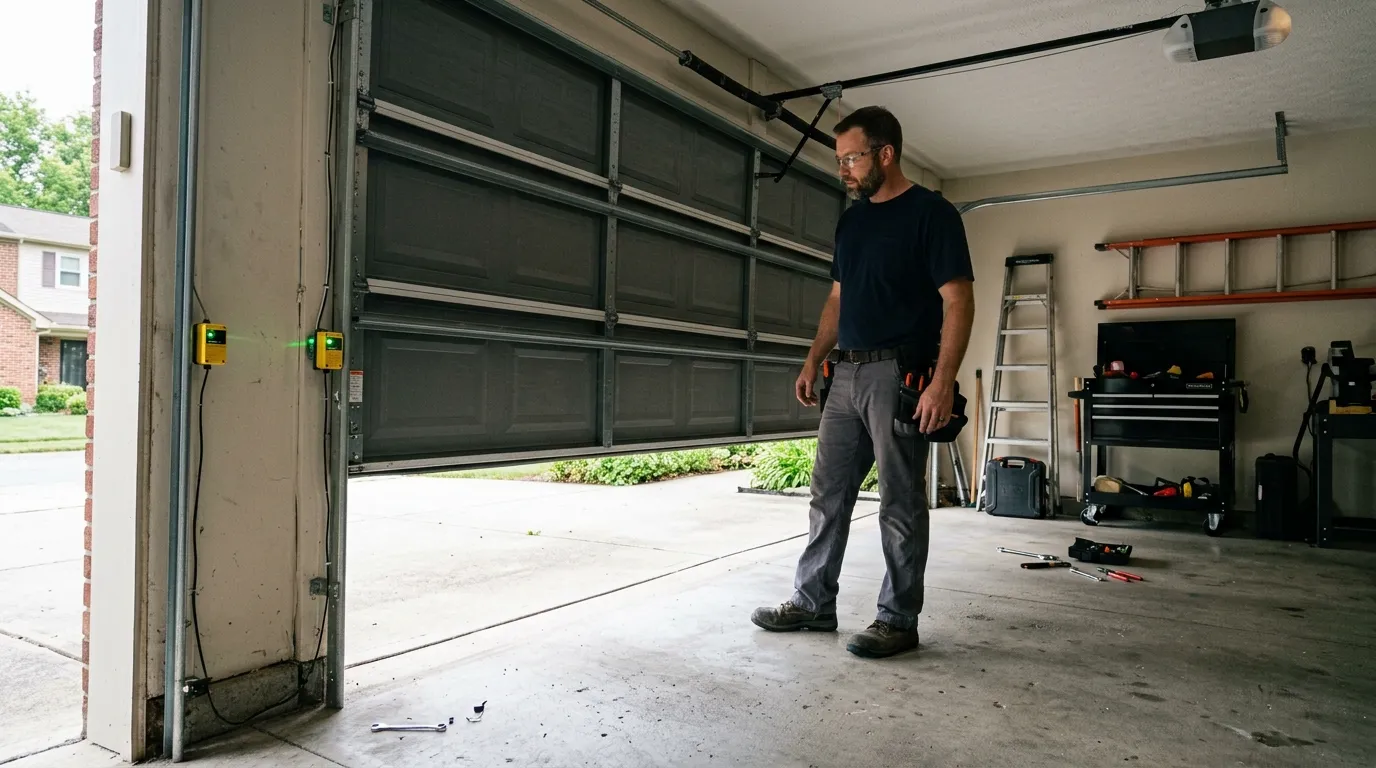
Wiring gets brought up to current code, including the safety reversal sensors that weren't required when the house was built. We test full open-close cycles under load before we call it done, not just an empty swing.
Local causes
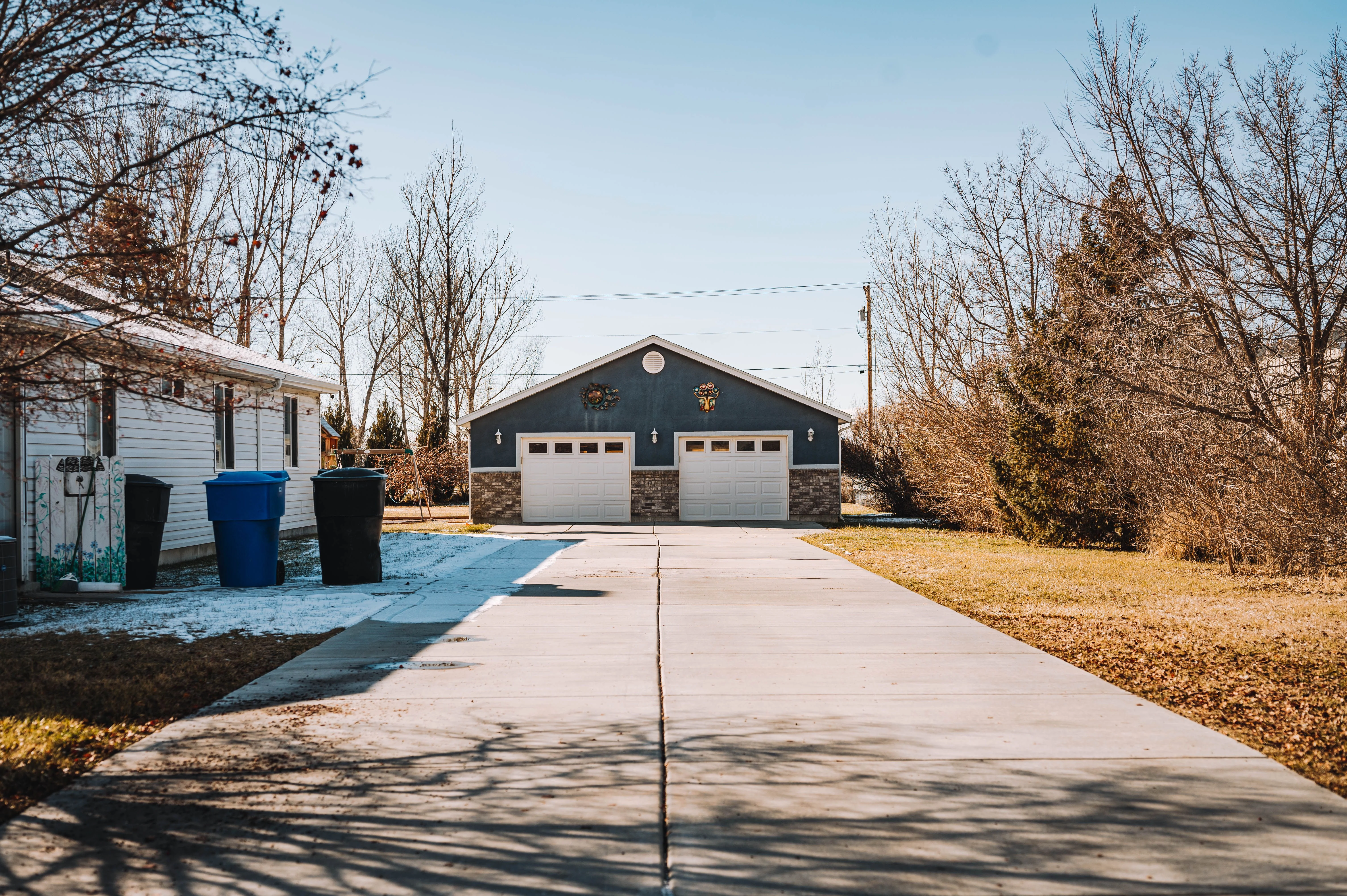
Harbour Heights sits in the same mild temperate band as the rest of the region, without the deep freeze-thaw cycles that crack gears and seize springs up north. That's part of why openers here tend to fail from age and use rather than weather damage. What does show up is straightforward wear: a chain-drive unit installed when the house went up in the late '80s has had thirty-plus years of daily cycling with no climate stress to speed things along, so when it finally goes, it's simply worn out, not storm-damaged. Across the roughly 1,765 households in this area, a fair number are sitting on that same original hardware, which is why we see the same failure pattern house after house on this side of the county.
On the truck
We stock the openers, rail kits, and sensor packages that fit most 1980s and 1990s installs, since that's what most of Harbour Heights still has bolted to the ceiling. Where we run into trouble is a house with a genuinely oddball setup - a custom-width door or a header bracket someone modified over the years - where the standard rail kit doesn't sit right and we need to order a part instead of installing that day. We'll tell you upfront if that's the case rather than force a fit. It's a smaller share of jobs, but it happens, and a rushed install on mismatched hardware causes more callbacks than it saves time.

Questions
No. We're based in Punta Gorda, about 8 miles away, and drive out for every Harbour Heights job. There's no separate branch or depot here - the truck comes loaded with the opener and hardware sized for your door before it leaves Punta Gorda.
On a house from around 1989, that's usually a stripped drive gear or worn limit switches inside the motor housing, not the door itself. Those parts weren't built to last forever, and thirty-plus years of daily cycling wears them down gradually until the motor runs but the chain won't pull the door the rest of the way.
If your house dates to the late 1980s, it likely never had them, since they weren't required by code yet. Any new opener install today includes them as standard safety equipment, wired in during the same visit as the motor and rail swap.
Explore more
Ready when you are
Punta Gorda Garage Door Pros repairs and installs garage doors, springs and openers in Punta Gorda, FL and the surrounding area.