
Guide
What Decades-Old Doors in Punta Gorda Actually Deal With
Most Punta Gorda homes were built between 1971 and 2003, mostly in the 1980s and 90s. See how mild coastal humidity wears original garage door hardware.
Local detail
What the Weather Here Does to It
Punta Gorda sits in a mild temperate band. You don't get the hard freeze-thaw cycles that crack torsion springs overnight up north, and you don't get the extreme dry heat that dries out lubricant in a season. That's the good news.
The bad news is that mild doesn't mean gentle - it means slow, steady wear that owners don't notice until it's finished. A spring in a mild climate doesn't snap from a cold snap; it fatigues from thousands of ordinary cycles across years of warm, humid air sitting on the coil. Track hardware doesn't rust out in one hurricane season; it corrodes a little at a time, year after year, especially on doors facing the water side of a property near Charlotte Harbor or Charlotte Park.
Because there's no dramatic weather event to blame, a lot of homeowners here assume their door is fine right up until the day it isn't. There's no ice storm to point to as the cause - just time, humidity, and a door that's been doing its job quietly since the Reagan administration. That's the pattern worth understanding before you decide a squeak or a slow-closing door can wait.
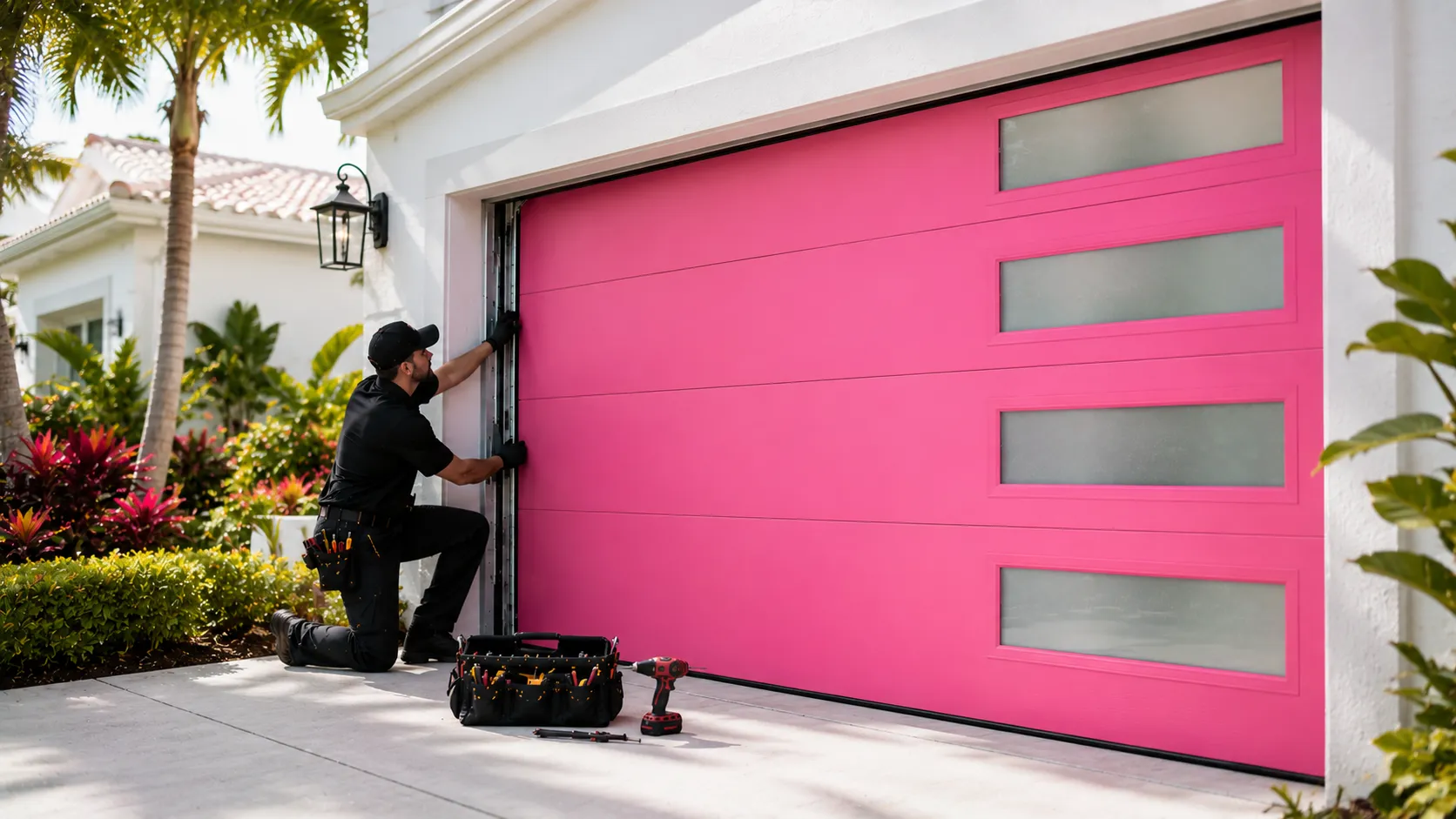
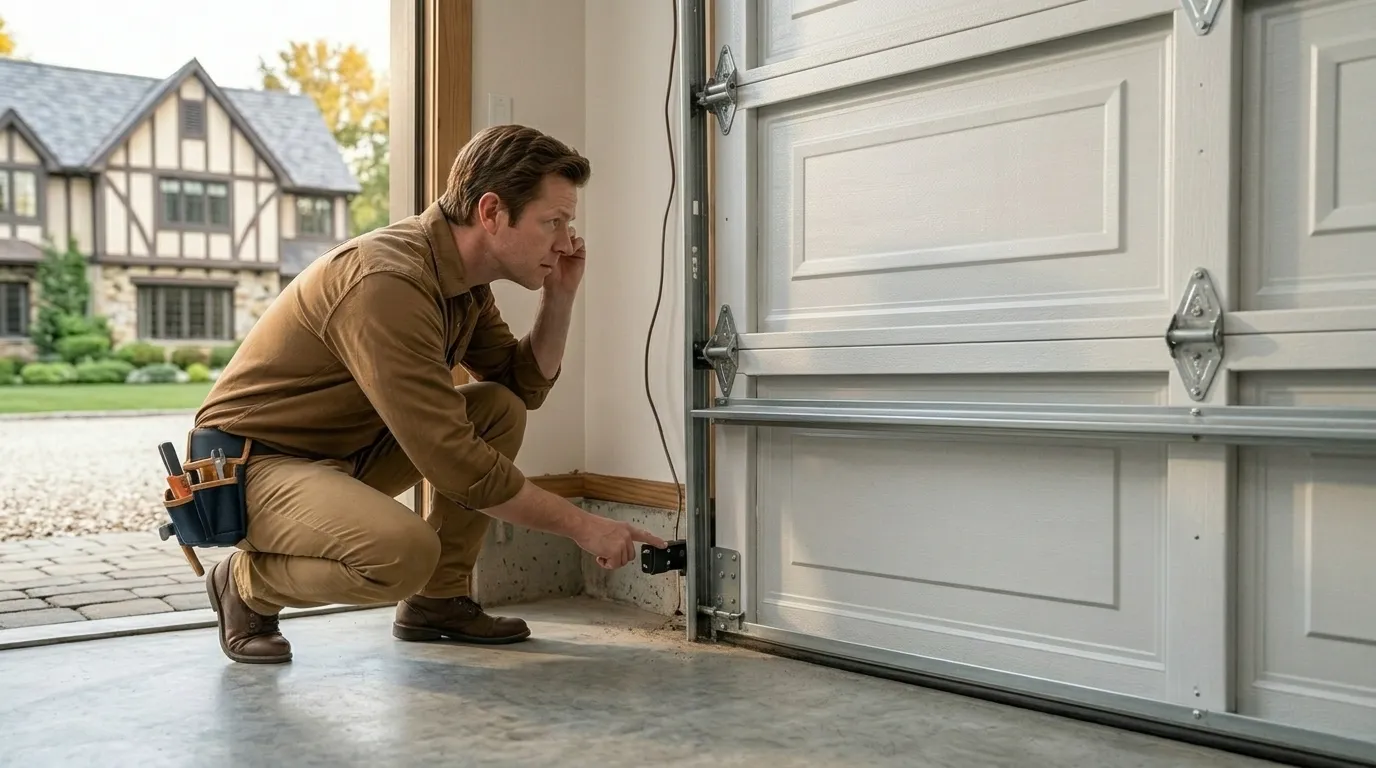
The area
The Problem
The housing stock across this service area was mostly built between 1971 and 2003, with the median landing around 1985, and that pattern repeats across all twelve named areas in this part of the county. That means a large share of the doors and openers in Punta Gorda garages are original or close to it - thirty-plus-year-old torsion springs, galvanized cable that's never been replaced, and openers with drive systems that predate anything you'd find in a hardware store today. Of the roughly 16,200 households in the service area, close to 6,900 are owner-occupied houses, which is the group most likely to still be running the door that came with the build.
Original hardware from the 1980s and 90s wasn't bad - a lot of it was built solid - but it was built to a code and a set of tolerances from before modern spring-cycle ratings and before rolling-code openers were standard. When that hardware finally lets go, it's usually the spring, and it usually happens without warning, because fatigue failure doesn't announce itself with noise first.
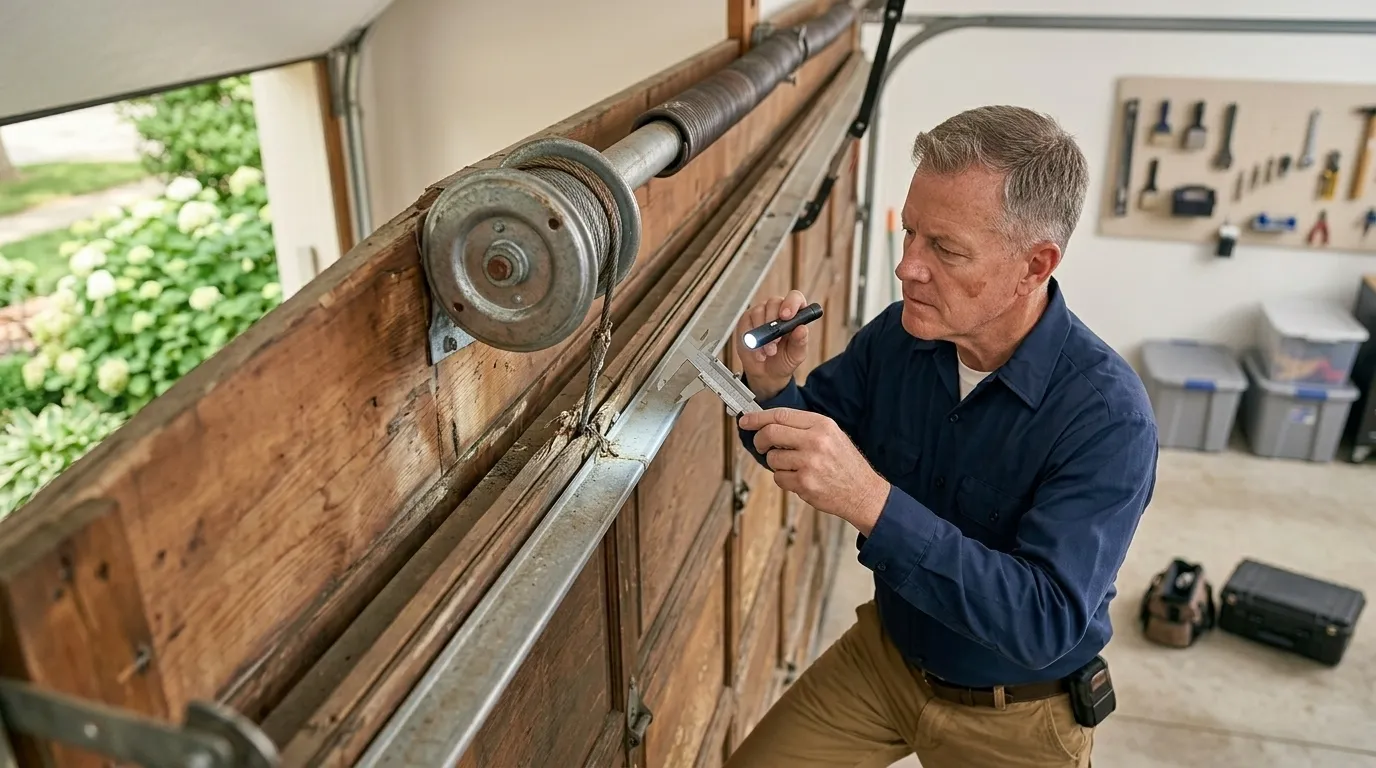
What we find
The Common Mistake
With a median household income around $56,000 in the area, a lot of homeowners make the reasonable call to put off garage door work until something actually breaks. That's a fair way to handle a full-price replacement. It's a bad way to handle a spring.
The common mistake we see on 1980s and 90s builds around Punta Gorda is waiting for a slow, stiff, or noisy door to fail completely before calling anyone - by which point the spring has usually snapped under load, sometimes with the door partway open, and what would've been a controlled repair becomes a door stuck on its track with a car underneath it. The other version of this mistake is spending money on the wrong thing: a new opener bolted onto worn-out original springs and rollers, which just moves the failure point instead of fixing it. If your door was built with the house sometime in that 1971-2003 window and nothing on it has ever been replaced, the smart order of operations is springs and rollers first, opener second - not the reverse.
How we work
Doing Nothing For Now
Here's the honest part: in a mild climate like this one, a worn door doesn't always need same-week attention. If your door is original to a 1980s or 90s build and it's just gotten a little louder or a little slower, it's reasonable to keep using it a while longer and budget for the work rather than treat it as an emergency - that's a fair call in this climate, and we'll tell you that straight instead of pushing a same-day job you don't need. What we won't do is tell you a slow door will fix itself or that mild weather means the hardware doesn't age.
It does. If the door is original to a house built in that 1971-2003 window and you haven't touched the springs, that clock is running whether or not you can hear it yet. When you're ready to have someone look at it, [start here](/).
Questions
Common questions
Does Punta Gorda's climate really wear out garage door springs if there's no freezing weather?
Yes. Springs fail from metal fatigue after a set number of open-close cycles, not just from cold. In a mild temperate climate like this one, that fatigue happens on schedule regardless of temperature, which is why a 30-plus-year-old spring on a house built in the 1980s or 90s is often past due even though it's never seen a hard freeze.
My house was built in the 1980s and the door still works fine - do I need to do anything?
Not necessarily right away. A working door on an original build isn't an emergency, and in this climate wear tends to be gradual rather than sudden. Worth having the springs and cables checked so you know where you stand, but if everything's moving smoothly there's no rule that says original hardware from that era has to be replaced on a calendar.
Why does my opener seem fine but the door still feels heavy?
On houses built in the 1971-2003 window, this is almost always the springs, not the opener. The opener is doing extra work to lift a door whose springs have lost tension over the decades. Replacing the opener without addressing the springs usually just burns out the new opener faster.
Ready when you are
Need a garage door sorted in Punta Gorda?
Punta Gorda Garage Door Pros repairs and installs garage doors, springs and openers in Punta Gorda, FL and the surrounding area.