
Guide
What That Sound Coming From Your Garage Door Actually Means
Punta Gorda's homes date mostly to the 1980s and 90s, built for mild weather. Learn what a grinding, popping, or screeching garage door is telling you.
Local detail
What the Weather Here Does to It
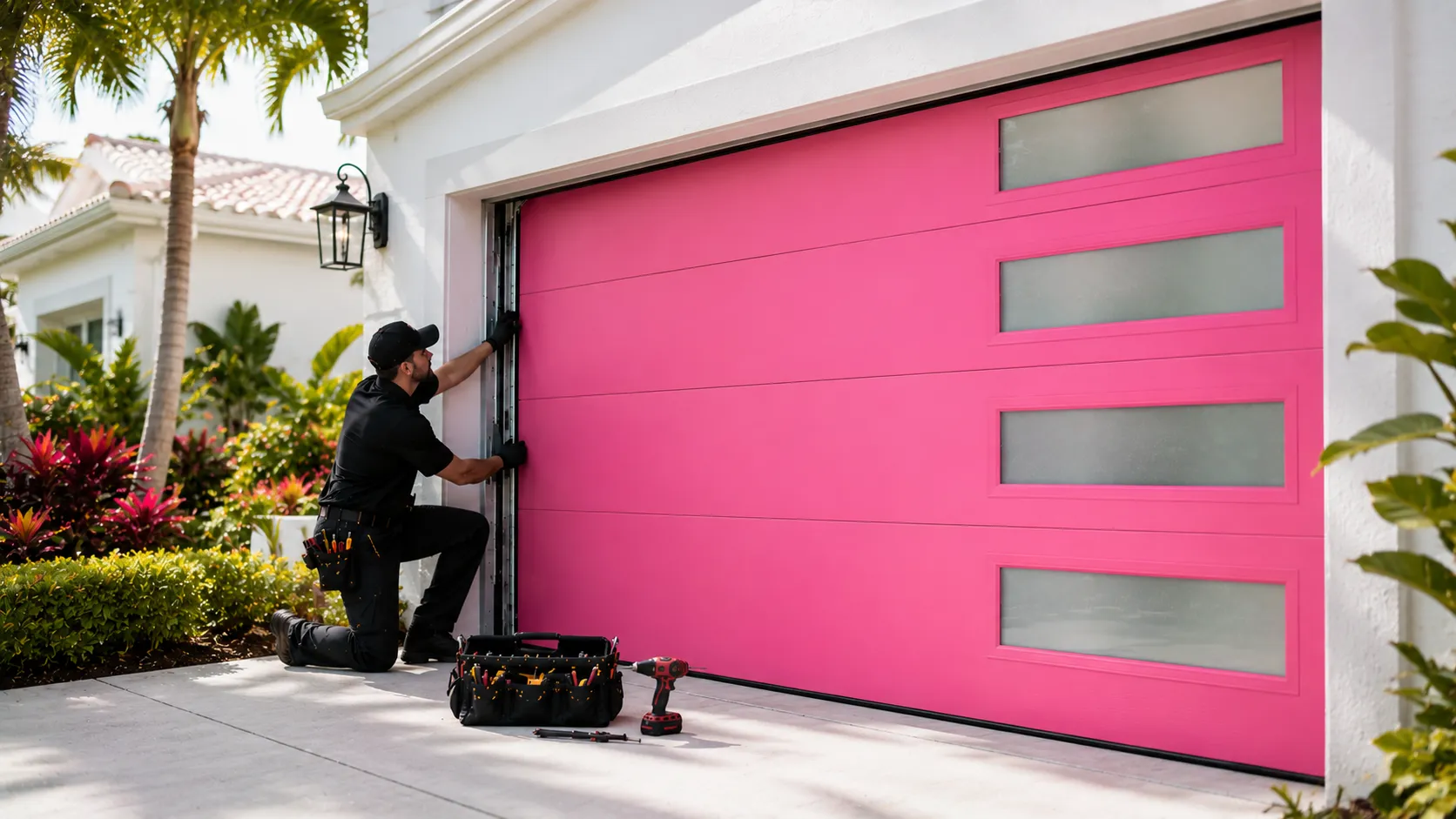
Punta Gorda sits in a mild temperate band, and that matters more than people think when it comes to garage door noise. Up north, a hard freeze followed by a thaw puts real stress on steel torsion springs - metal contracts, hardware binds, and a spring that was already tired snaps on the coldest morning of the year. That's not what happens here. Without the deep cold-to-warm swings, a spring in Punta Gorda doesn't usually fail from a single weather event. It fails slowly, from cycles and age, and it tells you first.
That's actually the useful part. A door that starts grinding, popping, or screeching here isn't reacting to last night's cold snap - there wasn't one. It's reacting to wear that's been building for years, and it's giving you a warning window that a colder climate wouldn't. The mild conditions buy you time to catch a problem before it becomes a Saturday morning where the door won't move at all. The catch is that a lot of owners read "no storm damage" as "no problem," which is exactly backwards.
The area
The Problem
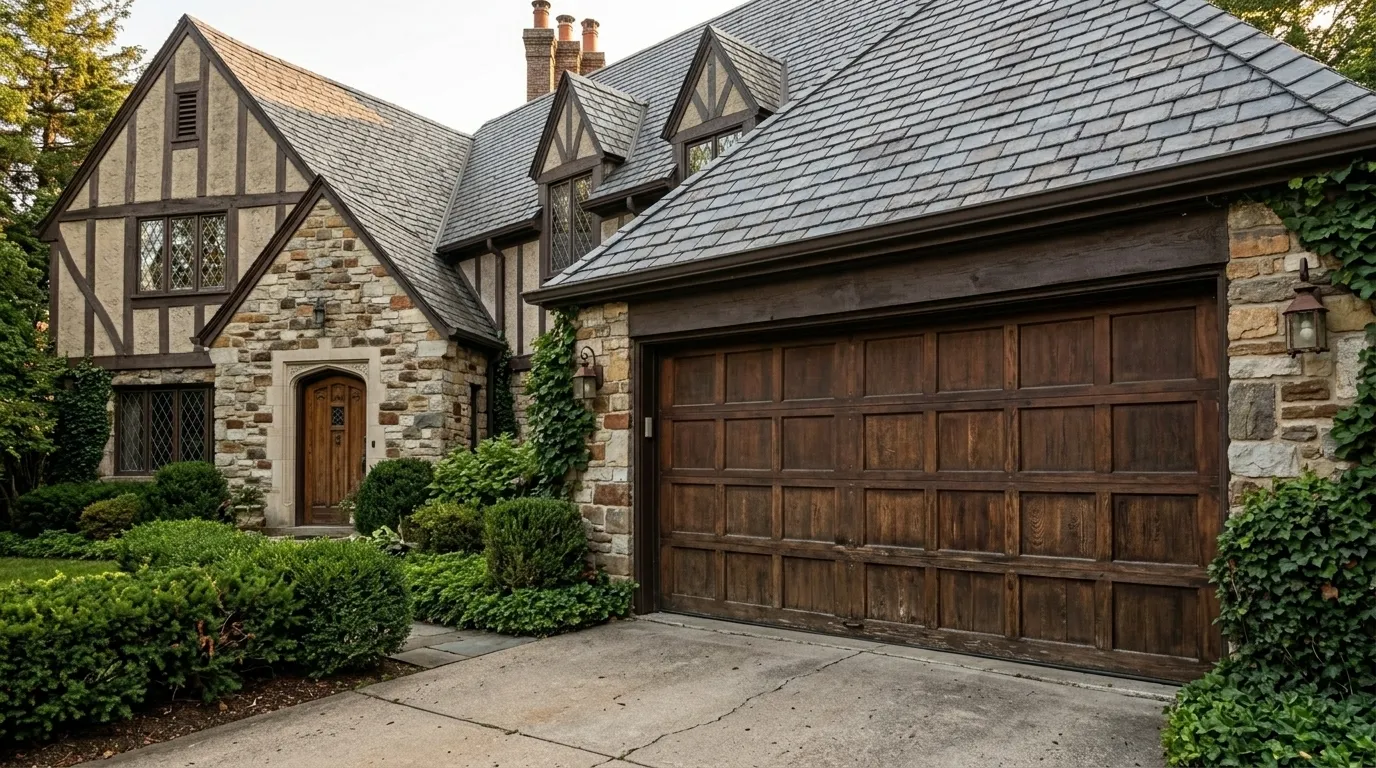
Housing across Punta Gorda's service area - the stretch running from Charlotte Park through Solana, Charlotte Harbor, Cleveland, Harbour Heights, Burnt Store Marina, and out to the farther named areas - was mostly built between 1971 and 2003, with the median landing around 1985. That puts a huge share of garage doors and their openers in the 30-to-40-year range, and a lot of it clustered in that 1980s-and-90s building wave that shows up across all twelve named areas here, not just one pocket.
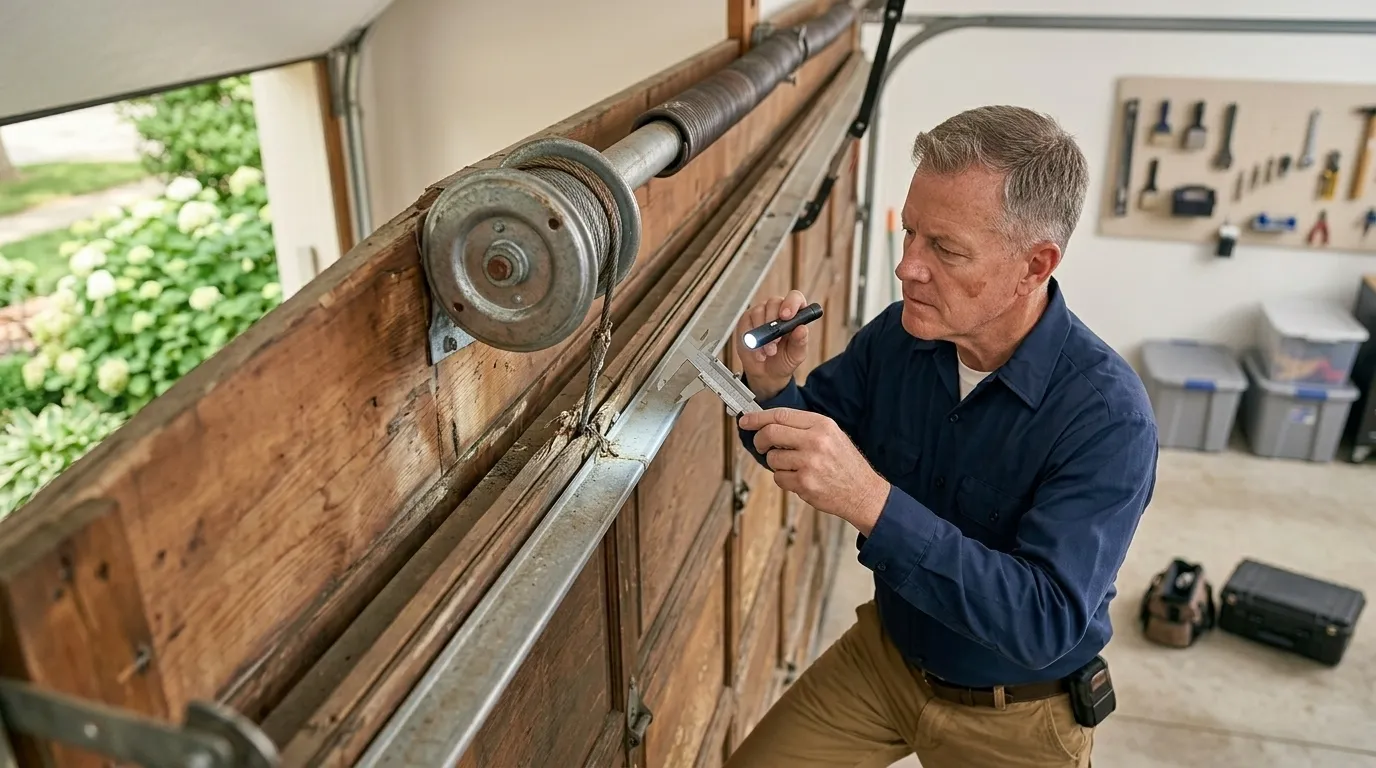
Hardware from that era wasn't built worse, but it's old. Torsion springs are rated for a number of open-close cycles, not a number of years, and a door installed in 1985 has been through a lot of cycles by now. Rollers wear grooves, bearings dry out, and cables fray at the drum even when nothing ever looked visibly wrong. The noise a door makes at this age - a rhythmic thump, a metallic screech on the way up, a hollow pop when it reverses - is usually the hardware telling you it's near the end of its rated life, not a one-off glitch that'll fix itself.
What we find
The Common Mistake
The mistake we see most is treating a noisy door as a lubrication problem, full stop. Sometimes it is - dry hinges and rollers do squeal, and a shot of the right lubricant on the right parts quiets that down fast. But spraying WD-40 on a spring or a bearing that's actually worn out just masks the sound for a week or two. It doesn't stop the cable from fraying or the spring from getting closer to the end of its cycle count. When the noise comes back louder, people are often surprised, but the underlying part never got looked at - it just got quieter for a while.
The honest limitation here: not every noise is fixable with a five-minute adjustment, and we're not going to tell you it is just to make the call easier. If a spring is near the end of its rated cycles, or an opener from the 1980s building wave is original to the house, oiling it buys you weeks, not years. Knowing which kind of noise you've got - dry hinge versus tired spring versus worn drum - is the difference between a quick fix and a part that's already decided its own timeline.
How we work
Doing Nothing For Now
With 6,912 owner-occupied houses out of 16,231 households across this service area, and median household income around $56,152, a lot of owners are weighing a repair against other things the house needs - and that's a reasonable thing to weigh. Waiting on a noisy door isn't automatically the wrong call. If the sound is new, mild, and the door still opens and closes smoothly, it's fair to keep an eye on it rather than treat it as an emergency.
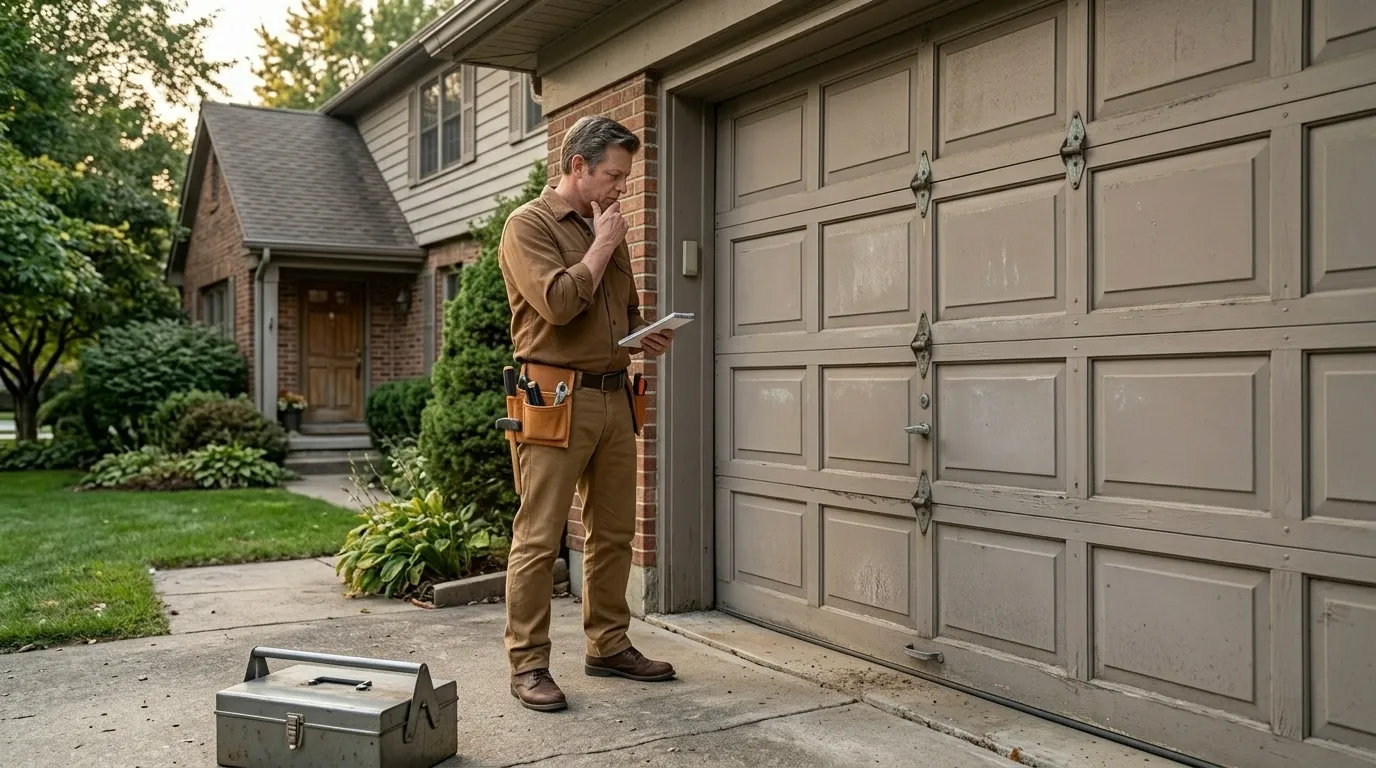
What changes the math is a door with original 1980s-90s hardware that's already loud and getting louder. At that point the part isn't announcing a future problem - it's mid-failure, and a torsion spring under tension doesn't fail gently. Given how much of the housing stock in Charlotte Park, Solana, Charlotte Harbor, Cleveland, and the areas farther out shares that same age and era, this isn't a rare situation, it's a common one right now. If you're not sure which category your door is in, that's worth a look before you decide to wait.
Questions
Common questions
Why does my garage door make more noise now than it used to?
Most doors in Punta Gorda's older neighborhoods date to the 1971-2003 building wave, with a lot clustered around 1985. Hardware that age has been through tens of thousands of open-close cycles. New noise usually means a part - a roller, bearing, or spring - is reaching the end of what it's rated for, not that something suddenly broke.
Does Punta Gorda's mild climate mean my springs last longer?
It means they're less likely to snap suddenly from a cold-to-warm swing the way they might up north. But mild weather doesn't stop cycle fatigue. A spring installed in the 1980s or 90s is old regardless of climate, and the mild conditions mainly mean it fails gradually with warning noise instead of all at once.
Is a grinding noise always a spring problem?
No. Grinding can be a dry roller, a worn bearing, a bent track, or a spring - each sounds a little different. Given how much of the housing stock here is original to the 1980s-90s wave, it's worth having someone identify which part it is before assuming the worst or ignoring it.
Ready when you are
Need a garage door sorted in Punta Gorda?
Punta Gorda Garage Door Pros repairs and installs garage doors, springs and openers in Punta Gorda, FL and the surrounding area.