
Guide
What Actually Happens When We Come Out to Your Door
A look at what a garage door service call in Punta Gorda actually involves, tied to the area's 1980s-era housing stock and mild climate, not generic advice.
Local detail
What the Weather Here Does to It
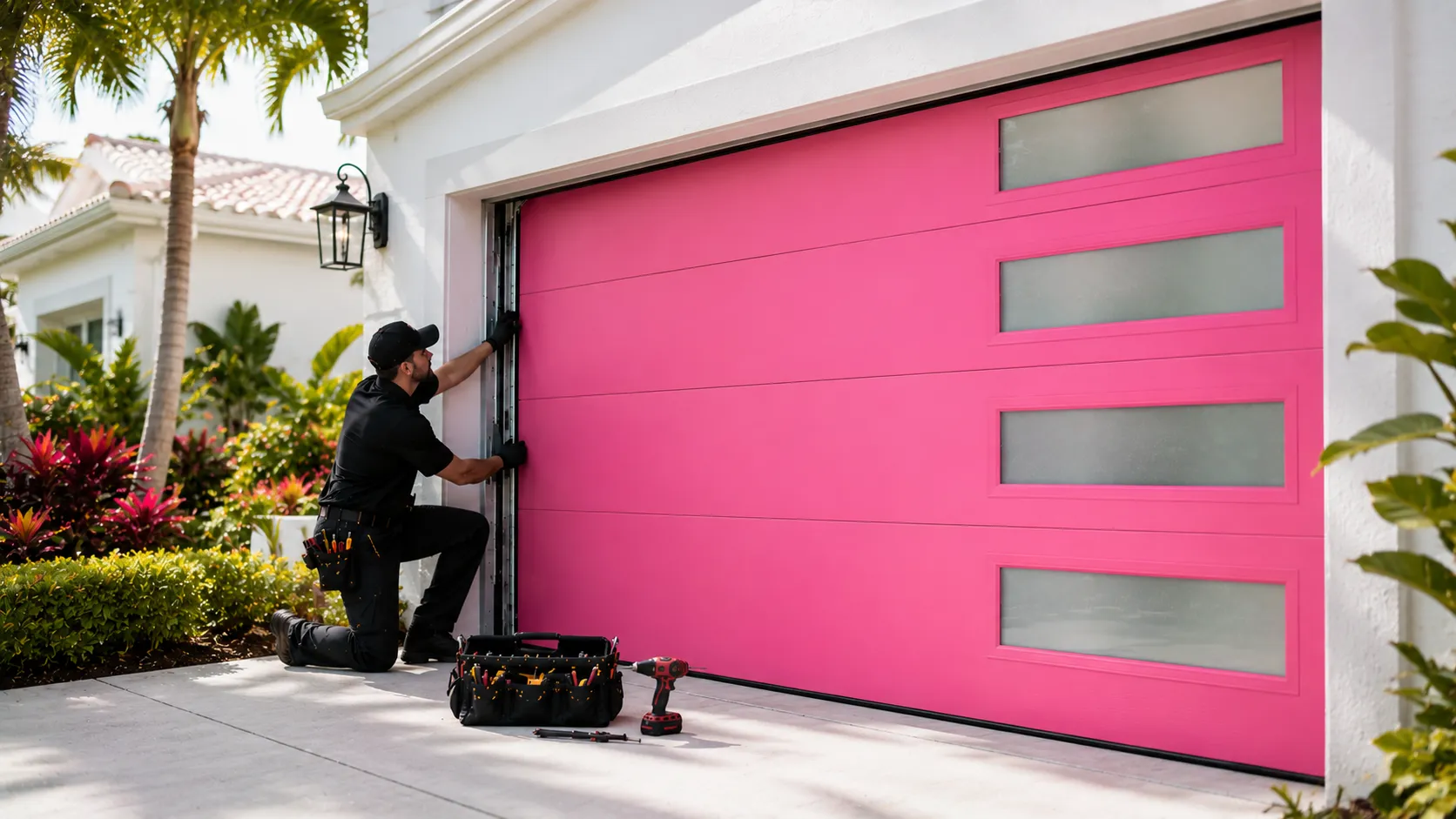
Punta Gorda sits in a mild temperate band, so your garage door isn't fighting hard freezes or wild temperature swings the way doors do farther north. That sounds like good news, and mostly it is - you don't get the cold-snap spring snaps that hit colder climates. But mild doesn't mean nothing happens. Humidity and steady warmth work on hardware differently: grease in the rollers and hinges breaks down slower but still breaks down, hardware corrodes quietly instead of cracking suddenly, and openers rack up cycles year-round without the winter lull other places get.
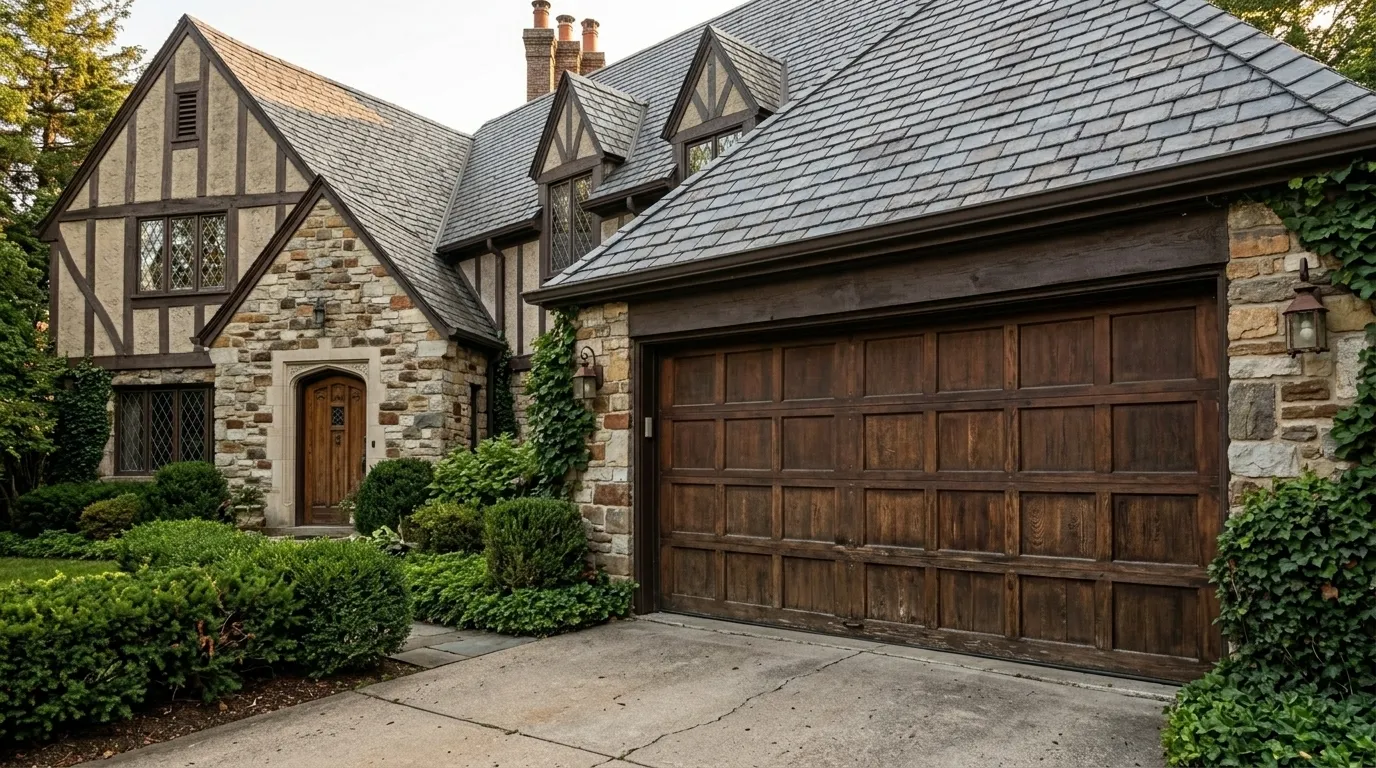
On a service call here, we're usually looking for gradual wear - a roller going out of round, a cable starting to fray, a sensor lens hazed over - rather than one dramatic failure. Most of the housing in this area was built between 1971 and 2003, with a lot of it clustering around 1985, so we're often working on original torsion springs and openers that have simply logged more open-close cycles than their rated life allows, worn down slow by a climate that never forced an early failure. That's the pattern a call here follows - steady decline, not sudden collapse.
The area
The Problem
The problem with steady wear instead of sudden failure is that nobody notices until the door won't move. A spring that's lost tension over fifteen years doesn't announce itself - the opener just starts straining harder each week to lift the same door, until one day it can't. In neighborhoods like Charlotte Park, about a mile from the shop, and out toward Solana and Charlotte Harbor, both around four miles, we see a lot of the same builder-grade hardware from the 1980s and 90s repeating house after house, because that's when this area filled in.
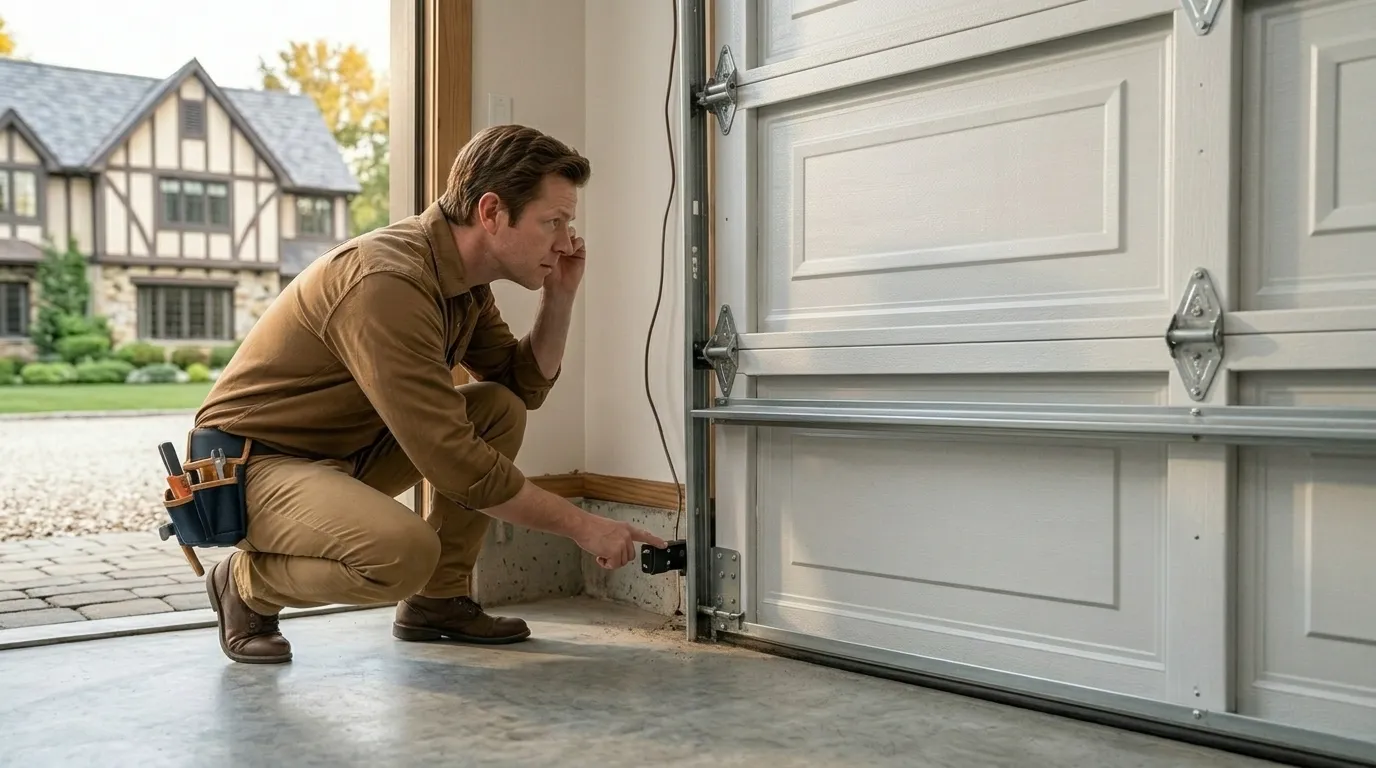
That means the same springs, the same cable gauges, the same opener models hitting the end of their service life around the same time. A service call on one of these doors usually isn't a single fix - it's diagnosing which of several aging parts is closest to letting go next. Rollers, cables, and springs on a door built in that era rarely fail one at a time and stay failed one at a time; they're all roughly the same age, so one going tells you the others aren't far behind.
What we find
The Common Mistake
The mistake we run into most is treating a slow symptom as a one-time glitch. The door groans going up, someone sprays some lubricant on it, and it quiets down for a month - so the thinking is it's fixed. It isn't. That's wear working its way through builder-grade hardware from the 1980s and 90s that's simply reached the end of what it was built to do, not a problem that oil solves.
With roughly 6,912 owner-occupied houses across a service area of 16,231 households, a good share of what we're called out to is original equipment, never replaced since the house was built. On a call, we're not just looking at the part that failed - we're checking the spring's wind count, the cable ends, the roller stems, because in a house from that era, if one part is thirty-plus years old, they all are. Treating the noise as the whole problem instead of a signal is how a $200 spring job turns into an opener burning itself out trying to lift a door it was never straining against before.
How we work
Doing Nothing For Now
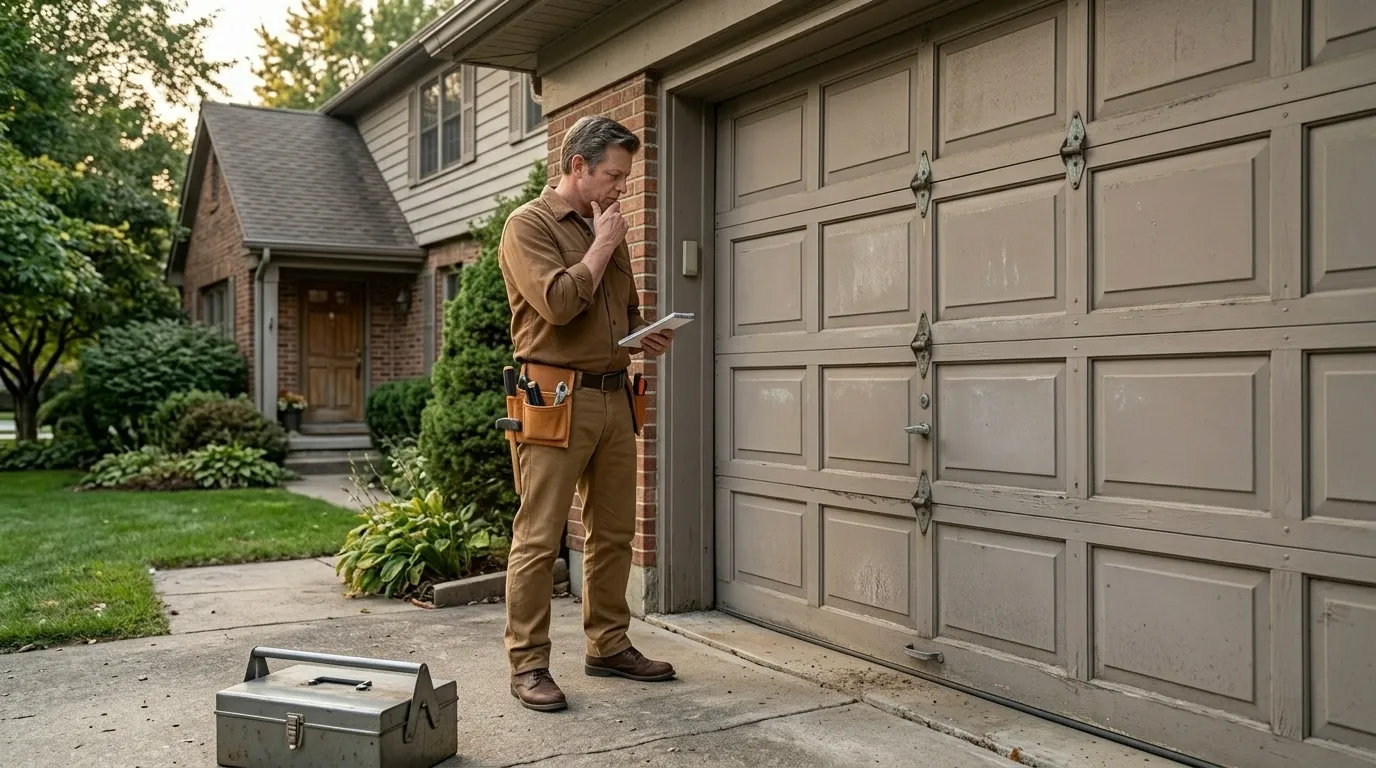
Sometimes doing nothing is the right call, and we'll tell you that when it's true - we're not going to talk you into replacing a door that's got another few years in it. If your door is quiet, opens level, and the opener isn't straining, there's no reason to touch it. Where we draw the line is cost versus what you're fixing.
At a median household income of $56,152 in this area, most of the calls we get are people weighing a repair against a full replacement, and honestly that's the right question to ask before any work starts, not after. A worn roller or a frayed cable is a cheap fix on its own. But if you're looking at a door built in the 1971-2003 window with a spring, opener, and rollers all original and all showing wear at once, patching one part while the others are close behind isn't doing nothing - it's paying for the same visit twice.
The honest limit here: we can't make a thirty-year-old door act new. Past a certain point, replacement costs less over time than repeated repair calls.
Questions
Common questions
Why does my garage door make noise even though it's never been cold enough to crack anything?
In this climate, doors wear from steady use and humidity, not cold. Grease breaks down slowly, hardware corrodes quietly, and rollers wear out of round over years of cycles. The noise is usually gradual wear, not sudden damage, which is why it's easy to miss until the opener starts straining.
Is my door's hardware likely original to the house?
If your house was built in the common range for this area, roughly 1971 to 2003 with a lot clustering around 1985, there's a good chance the spring, cable, and roller set are original. A service call usually checks all three together, since they tend to wear out around the same time.
Should I fix a single part or replace the door?
Depends on age and what else is worn. A single roller or cable is a cheap fix. If the spring, opener, and rollers are all original and all showing wear, patching one part often just delays the next call. We'll tell you honestly which situation you're in before we start work.
Ready when you are
Need a garage door sorted in Punta Gorda?
Punta Gorda Garage Door Pros repairs and installs garage doors, springs and openers in Punta Gorda, FL and the surrounding area.