
Guide
Should You Repair or Replace Your Punta Gorda Garage Door?
Most Punta Gorda garage doors date to the 1971-2003 building boom. Here's how mild coastal humidity affects them, and why repair often beats replacement here.
Local detail
What the Weather Here Does to It
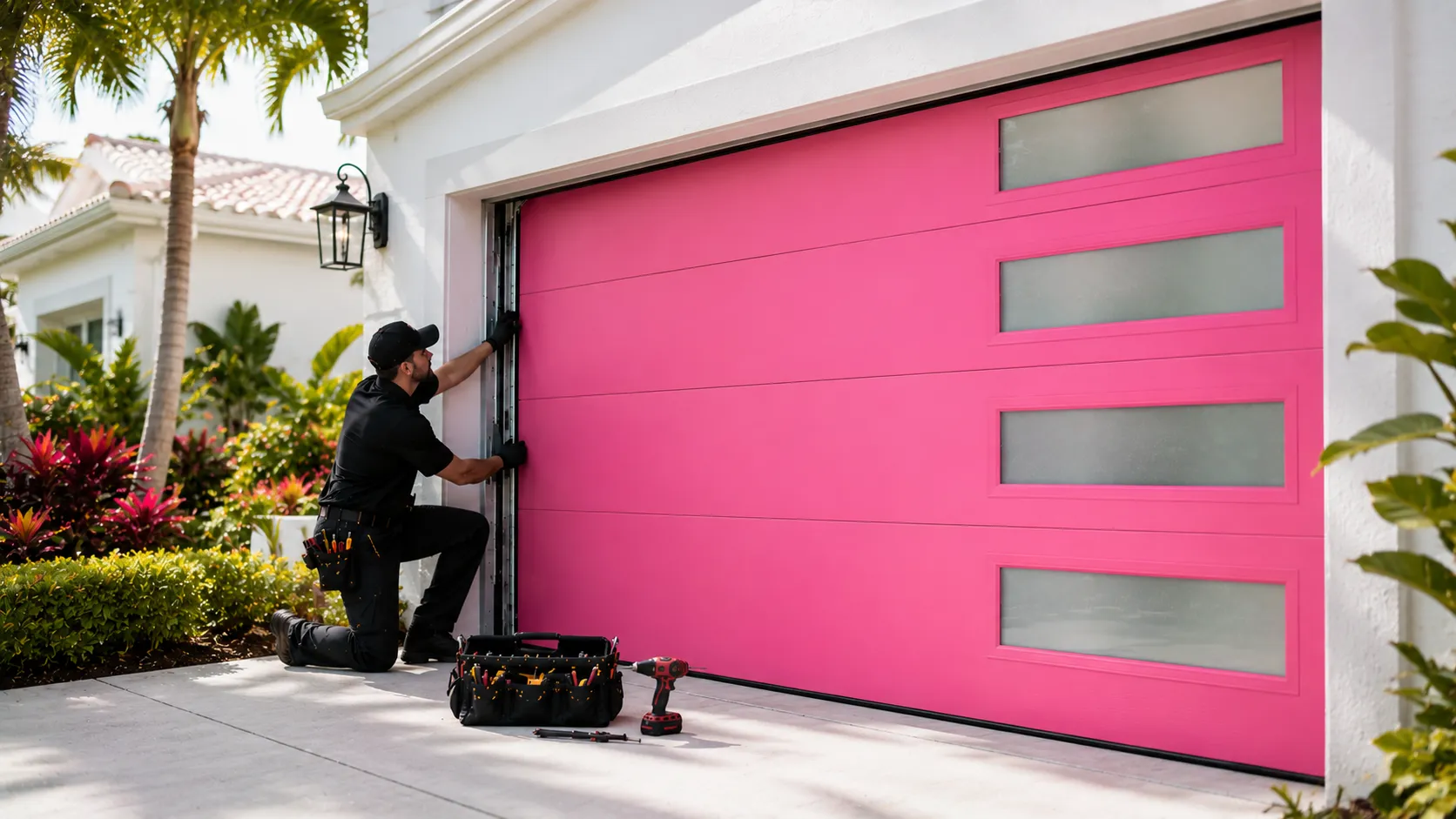
Punta Gorda sits in a mild temperate band, which means the door on your house isn't fighting the freeze-thaw cycle that tears up hardware up north. That's the good news. The springs, hinges, and rollers on an older door here often outlast what you'd see in a colder state, simply because the metal isn't expanding and contracting all winter.
But mild doesn't mean dry. Humidity off the water does its own kind of damage, slower and quieter than cold. It works into the bottom bracket welds, the track bolts, and the spring coils, and it rusts from the inside of the coil out, so a spring can look fine on the outside and still be close to failing. Houses closer to the water, like the stretch toward Charlotte Harbor four miles out or Burnt Store Marina at nine, see that corrosion show up faster than the same door sitting a few miles inland in Charlotte Park.
So the climate question here isn't "how cold does it get" - it's how much salt-tinged moisture has been sitting on that hardware for the last twenty or thirty years. That's the number that actually predicts what shape your door is in.
The area
The Problem
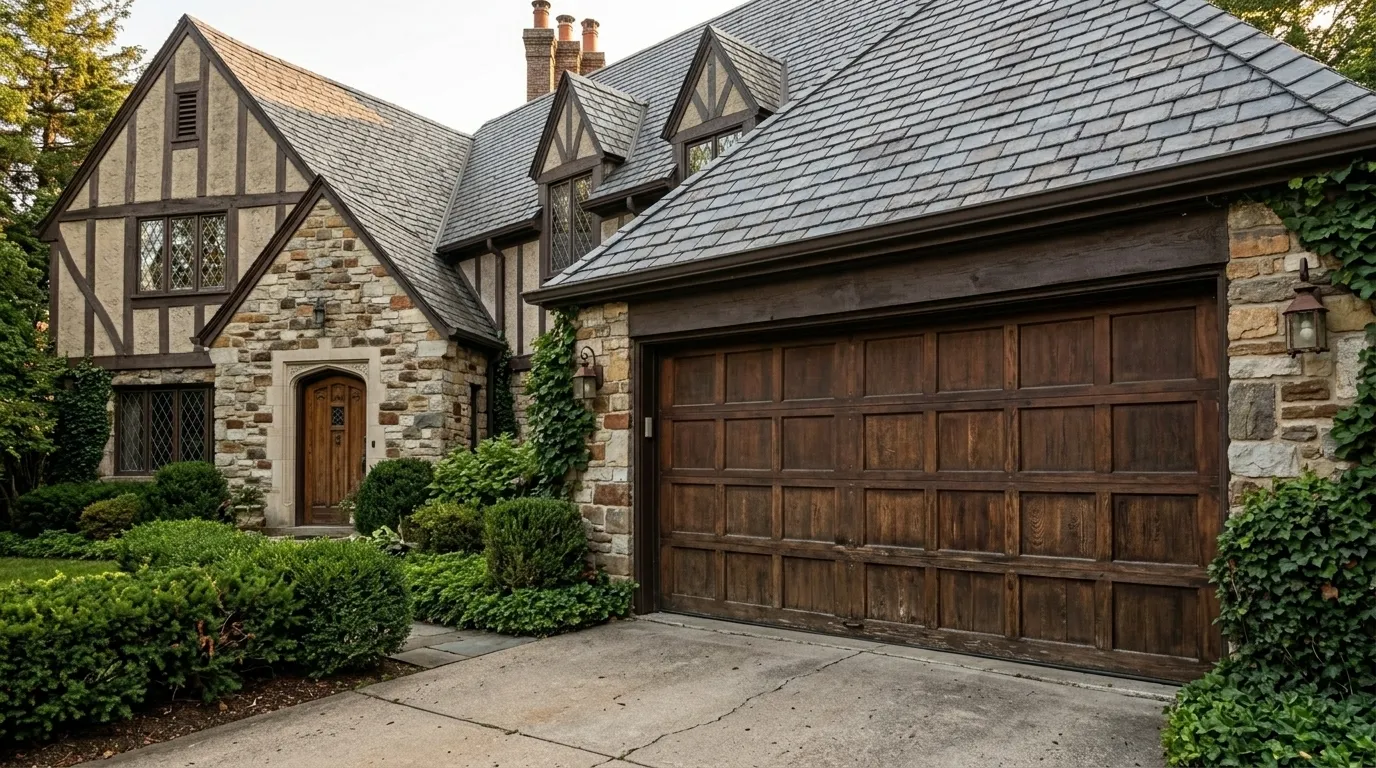
A lot of the housing stock around here went up between 1971 and 2003, with the median landing around 1985. Across the dozen or so pockets of development that make up most of the area - the 1980s and 90s subdivisions especially - a handful of the same builder-grade door models keep showing up on service calls.
Those doors were built to a cycle-life spec for springs, usually somewhere in the 10,000-cycle range, and a door opened twice a day has already burned through that a few times over by now. The steel skins on doors from that era are also thinner than what's sold today, and a lot of them were never insulated, so panels that have taken a light bump or two have started to bow or ripple.
None of that means the door needs to come out. A torsion spring, a bottom bracket, even a section of track - those are parts, and parts get replaced on doors twice this age all the time. The real question is whether the door itself, the panels and the frame, is still square and structurally sound underneath the worn hardware. That's a different inspection than checking if the opener still runs.
What we find
The Common Mistake
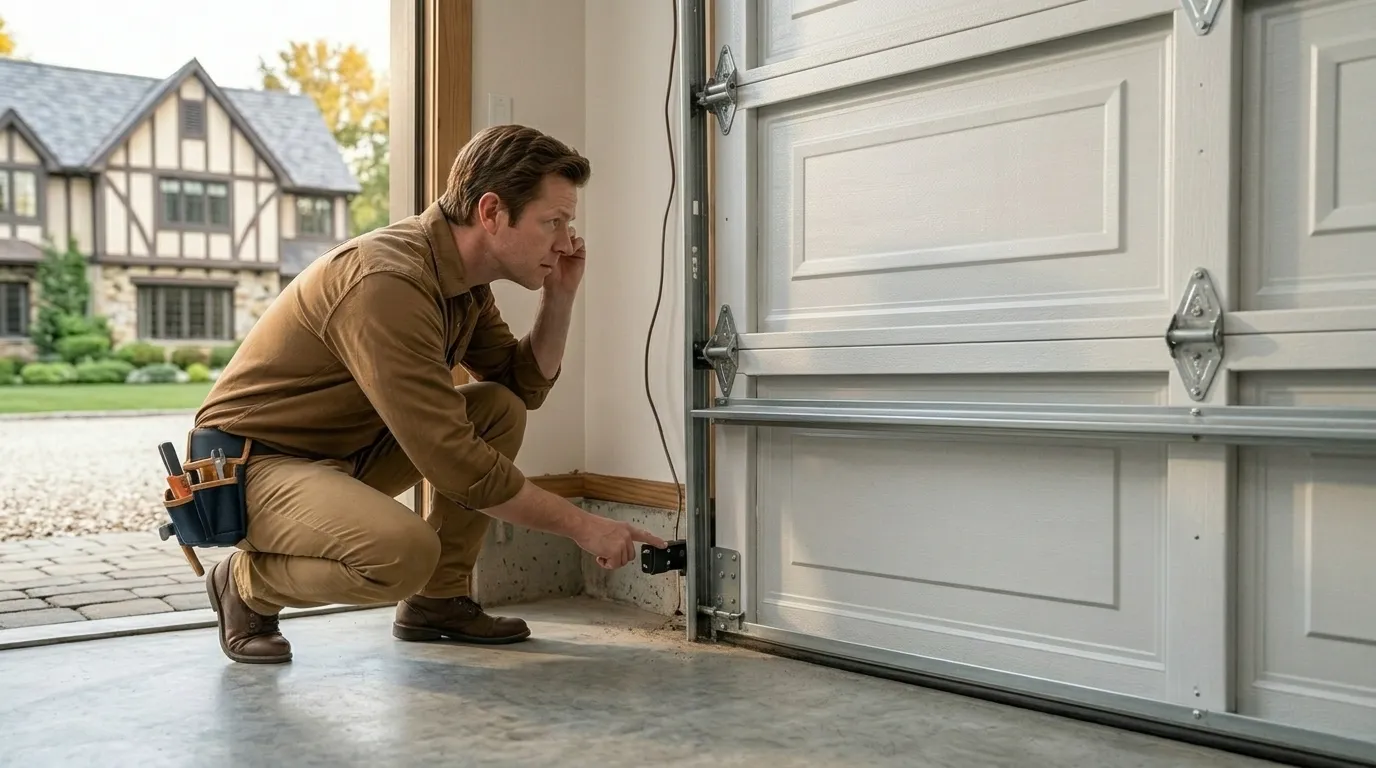
The mistake we see most is treating the opener as the whole story. Someone swaps a dead opener for a new one, the door goes up and down again, and they figure the job's done. But the opener was never what was failing - it's usually a spring past its cycle life or a bottom bracket rusted thin from years of coastal humidity, and a new opener bolted to that same tired hardware just means the next failure happens on a Saturday instead of a Tuesday.
The other mistake runs the other direction: assuming that because the climate here is mild, an original 1970s or early-80s door must still be fine since it "never really gets stressed." Mild weather slows corrosion, it doesn't stop it. A door built in 1971 has had over fifty years for moisture to work through every joint and fastener, mild climate or not, and that's simply more time than a door built in 1998 has had.
Age from F1's build range matters more than how the door looks from the driveway.
How we work
Doing Nothing For Now
Here's the honest part: sometimes the right call is to wait. If your door is still closing flush, the panels are straight, and the springs are original but haven't shown any fraying or gap in the coil, there's no reason to replace a door that's doing its job just because of its age. Given the median household income in this area sits around $56,152, we'd rather point that out than push a replacement nobody needs yet.
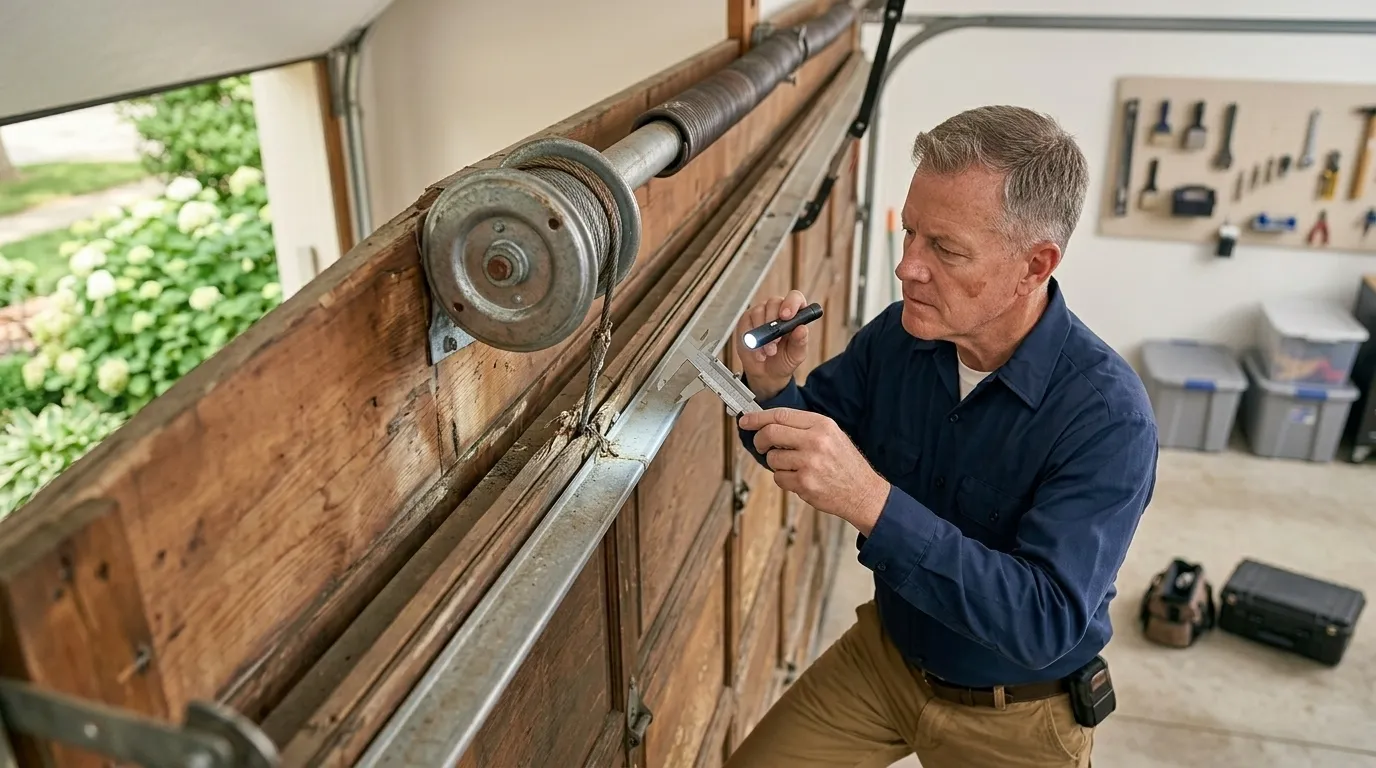
What we won't tell you to wait on is a spring that's visibly rusted at the coil or a cable that's starting to fray - those don't get better with time, and they're the parts most likely to fail without warning, usually while the door's halfway open. If you're not sure which category yours falls into, that's worth a look before you decide either way. You can find our contact info on the [home page](/).
Questions
Common questions
How do I know if my garage door is too old to repair?
Age alone doesn't decide it - condition does. A door from the 1970s or 80s with straight panels and hardware that's only surface-rusted is often still a fair repair candidate. If the frame's racked, panels are bowed, or more than one system (springs, track, and opener) is failing at once, replacement usually makes more financial sense than repair.
Does Punta Gorda's climate shorten garage door life?
Not the way cold climates do. Mild temperatures mean less metal fatigue from freeze-thaw cycles, so tracks and springs often last longer here than up north. The trade-off is humidity, which corrodes hardware slowly, especially on homes closer to the water.
My door still works fine - should I replace it anyway?
No. If it's opening smoothly, sealing at the bottom, and the springs show no rust or fraying, there's no reason tied to age alone to replace it. Plenty of doors built during the area's 1971-2003 construction years are still doing their job.
Ready when you are
Need a garage door sorted in Punta Gorda?
Punta Gorda Garage Door Pros repairs and installs garage doors, springs and openers in Punta Gorda, FL and the surrounding area.